
Common Causes of Balcony Concrete Deterioration
Concrete balconies are exposed to some of the harshest conditions of any part of a building. Year-round exposure to rain, sunlight, temperature changes and airborne contaminants means even well-constructed balconies can begin to deteriorate over time if they are not properly designed, waterproofed or maintained.
While many people associate balcony deterioration with "concrete cancer," reinforcement corrosion is only one of several mechanisms that can cause concrete to deteriorate.
Understanding the common causes of balcony deterioration can help property owners identify problems early, minimise repair costs and extend the service life of their building.
Reinforcement Corrosion
The most common cause of balcony concrete deterioration is corrosion of the reinforcing steel embedded within the concrete.
Concrete naturally protects steel by creating an alkaline environment that inhibits corrosion. However, when moisture, oxygen and chlorides penetrate the concrete, this protective environment can break down.
As reinforcing steel corrodes, it expands significantly in volume, generating internal pressure within the concrete. This pressure eventually causes cracking, delamination and concrete spalling.
Balcony edges are particularly susceptible because they are often exposed to greater levels of moisture and environmental weathering than internal sections of the slab.
Common signs include:
Rust staining
Cracking along reinforcement
Hollow sounding concrete
Concrete spalling
Exposed reinforcing steel
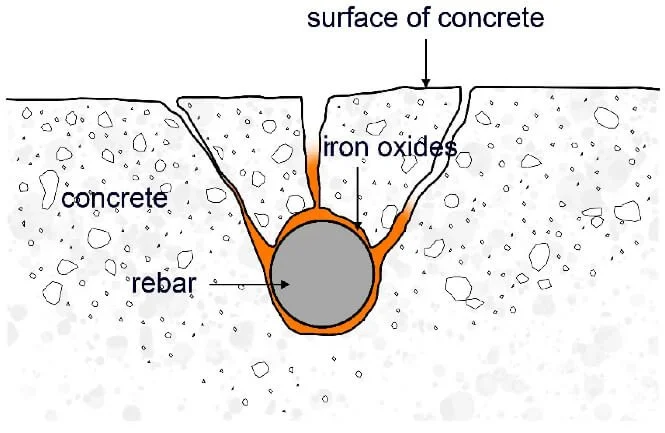
A diagram demonstrating the process of concrete spalling and corrosion (Credit Amphora Consulting)
Inadequate Waterproofing
Balconies rely heavily on waterproofing systems to prevent moisture from entering the concrete structure.
Over time, waterproof membranes may deteriorate due to ageing, UV exposure, poor installation or mechanical damage.
Once water begins penetrating beneath tiles or finishes, it can remain trapped within the slab, accelerating reinforcement corrosion and concrete deterioration.
Maintaining waterproofing systems is one of the most effective ways to protect reinforced concrete balconies. This doesn’t necessarily mean demolition of finishes to reinstate the membrane (although this may be required if the membrane has failed). Using and maintaining a tile sealer can significantly reduce the moisture content soaked up by the tiles and grout, creating a first line of defence. Maintenance of protective coatings on exposed concrete edges also goes a long way in increasing the lifespan of the concrete.
Poor Drainage
Standing water significantly increases the likelihood of long-term deterioration.
Where balconies have insufficient falls, blocked outlets or poor drainage design, water can pond on the surface for extended periods following rainfall.
Repeated wetting and drying cycles allow greater moisture penetration into the concrete and increase the risk of corrosion and freeze-thaw damage in colder climates. Proper drainage should always be considered during both construction and refurbishment.
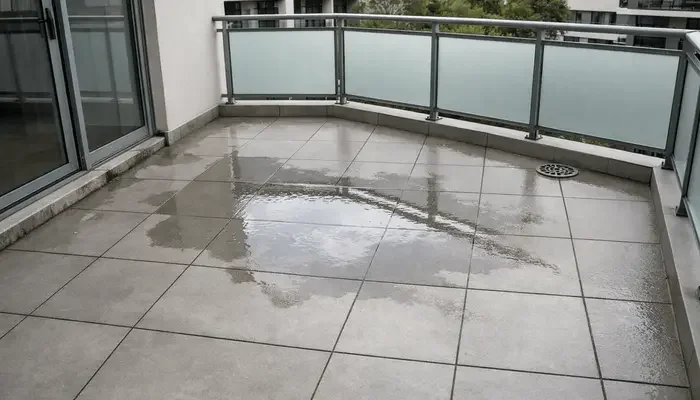
An example of inadequate falls resulting in ponding water (Credit H20Supplies)
Chloride Exposure
Properties located near the coast are exposed to airborne salt carried by sea breezes. Over many years, chlorides penetrate the concrete and eventually reach the reinforcing steel. Unlike general weathering, chloride-induced corrosion can occur even where no visible cracking initially exists, making regular inspections and maintenance particularly important for coastal properties.
Carbonation
Concrete naturally becomes less alkaline over time through a process known as carbonation. Carbon dioxide from the atmosphere slowly penetrates the concrete and reacts with compounds within the cement, reducing the concrete's ability to protect embedded reinforcement.
Once carbonation reaches the reinforcing steel, corrosion can begin if sufficient moisture is present. Older balconies with limited concrete cover are particularly vulnerable to carbonation-induced deterioration.
Inadequate Concrete Cover
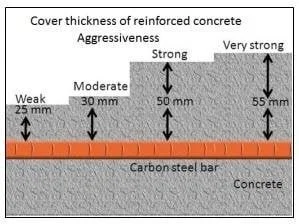
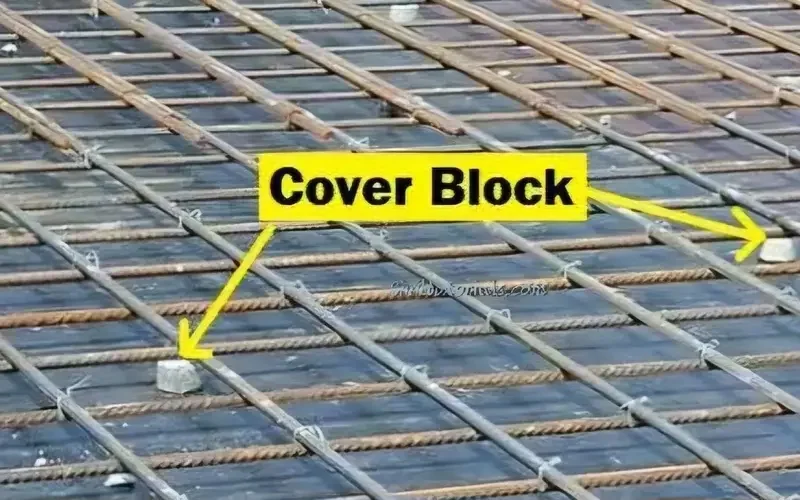
Concrete cover is the thickness of concrete protecting the reinforcing steel. If insufficient cover is provided during construction, moisture, oxygen and chlorides reach the reinforcement much sooner, significantly reducing the service life of the balcony.
Adequate concrete cover is one of the most important factors influencing the long-term durability of reinforced concrete.
Construction Defects
Defects present during construction can also contribute to premature deterioration.
These may include:
Honeycombing
Poor concrete consolidation
Cold joints
Voids
Incorrect reinforcement placement
Poor-quality concrete
While some defects may appear minor initially, they can become pathways for moisture ingress and accelerate long-term deterioration.
Lack of Maintenance
Like any part of a building, concrete balconies require periodic inspection and maintenance. Small cracks, failed sealants and localised water ingress are often inexpensive to repair when identified early.
Ignoring these issues allows deterioration to progress, resulting in larger structural repairs and significantly higher costs. Routine inspections are particularly important for older apartment buildings and coastal properties.
Signs Your Balcony May Require Attention
Early identification can often prevent extensive concrete repairs.
Warning signs include:
Cracks in the concrete
Rust staining
Concrete spalling
Hollow sounding areas
Water leaks beneath the balcony
Loose tiles
Ponding water after rain
Exposed reinforcement
Efflorescence (white stains at the grout joints)
If any of these symptoms are present, the balcony should be assessed before deterioration progresses further.
How Balcony Concrete Is Repaired
The appropriate repair method depends on the underlying cause of the deterioration.
Repairs may involve:
Removal of deteriorated concrete.
Cleaning and protecting reinforcing steel.
Reinstatement using structural repair mortars or grouts.
Tile demolition and replacement of failed waterproof membranes.
Application of anti-carbonation or protective coating systems.
Localised crack repairs.
Improvements to drainage where required.
Every balcony should be assessed individually to ensure the repair addresses the root cause rather than simply treating the visible damage.
Preventing Future Deterioration
Many balcony defects can be avoided through proactive maintenance and good construction practices.
Property owners should:
Maintain waterproofing systems.
Keep drainage outlets clear.
Repair cracks promptly.
Inspect balconies regularly.
Address rust staining before spalling develops.
Protect exposed concrete with suitable coating systems where appropriate.
Taking action early is almost always more cost-effective than waiting until significant structural repairs become necessary.
Need Expert Balcony Concrete Repairs?
Whether your balcony is showing signs of concrete spalling, cracking, reinforcement corrosion or water damage, early intervention is essential to preserving both safety and durability.
At TruBond Concrete Repairs, we specialise in diagnosing the underlying causes of concrete deterioration and delivering tailored repair solutions that restore the structural integrity and appearance of reinforced concrete balconies across Sydney.