
Concrete Delamination Explained: Causes, Signs and Repair Methods
Concrete is one of the most durable construction materials available, but like any material, defects can occur if it is not placed and finished correctly.
One such defect is concrete delamination. Often mistaken for concrete spalling or concrete cancer, delamination is a distinct problem that typically originates during construction rather than developing over many years.
Understanding what causes concrete delamination, how to identify it and when it requires repair can help prevent costly remedial work and extend the service life of a concrete structure.
What Is Concrete Delamination?
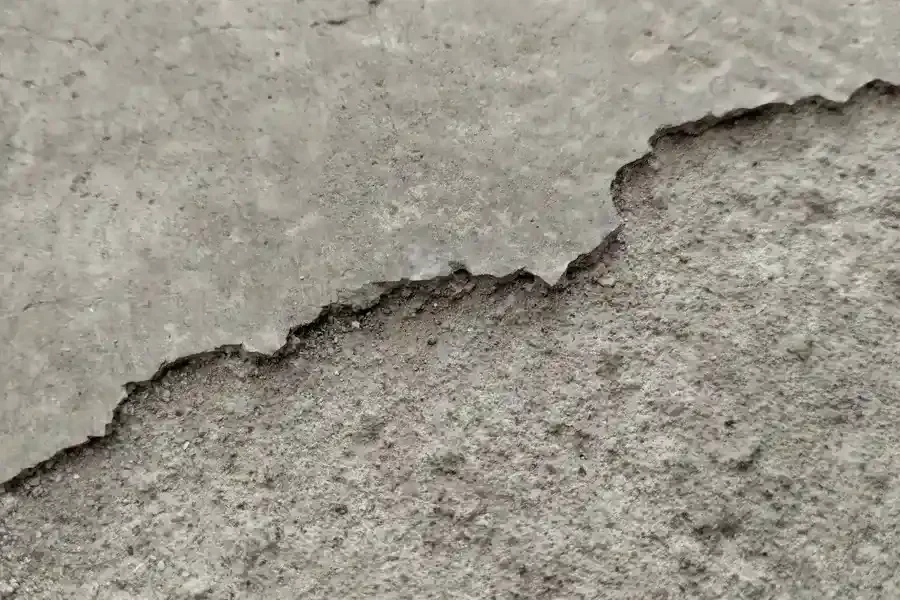
Concrete delamination occurs when a thin layer of concrete separates from the sound concrete beneath it, creating a hollow or unbonded layer below the surface.
Unlike cracks or spalling, the surface may initially appear completely intact. However, because the upper layer is no longer fully bonded to the concrete below, it is significantly weaker and more susceptible to failure under traffic, impact or environmental exposure.
Delamination is most commonly found in:
Concrete floor slabs
Warehouse floors
Car parks
Industrial facilities
Suspended slabs
Concrete pavements
Bridge decks
What Causes Concrete Delamination?
Concrete delamination is almost always associated with the placement and finishing of fresh concrete.
Premature Finishing
The most common cause of delamination is finishing the concrete before bleeding has finished.
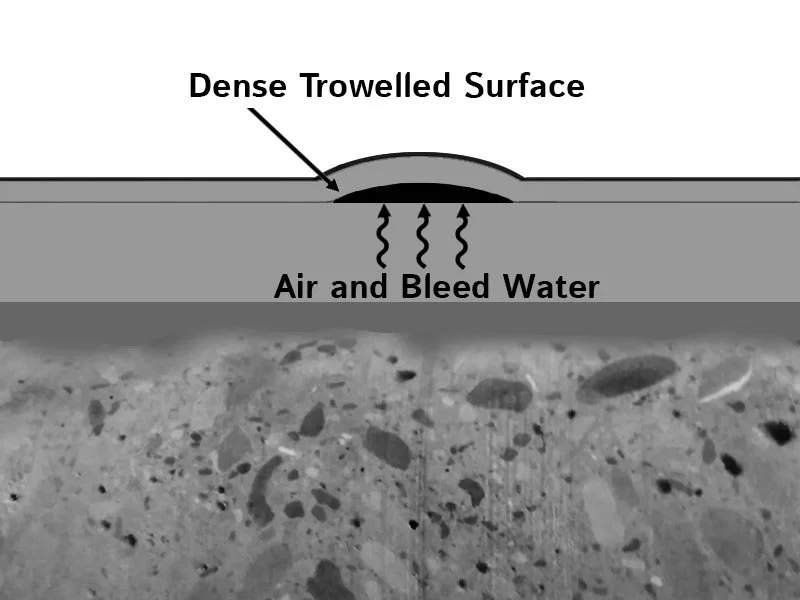
As freshly placed concrete begins to set, water naturally rises to the surface in a process known as bleeding. If the surface is closed by floating or steel trowelling before this process is complete, bleed water and air become trapped beneath the finished surface.
This creates a weak plane within the concrete that may later separate from the underlying concrete.
Entrapped Bleed Water and Air
Closely related to premature finishing is the entrapment of bleed water or air directly beneath the finished surface.
Rather than forming a dense, well-bonded concrete matrix, the trapped water or air leaves a thin layer of weakened concrete that can eventually become detached under service loads.
Credit CoGri Group LTD
Surface Crusting
Environmental conditions can also contribute to delamination.
On hot, windy or low-humidity days, the surface of the concrete may dry much faster than the concrete beneath it. This phenomenon, known as surface crusting, can make the slab appear ready for finishing when the underlying concrete is still plastic and bleeding.
Finishing at this stage traps water beneath the surface and significantly increases the likelihood of future delamination.
Air-Entrained Concrete
Air-entrained concrete contains microscopic air bubbles designed to improve freeze-thaw durability.
However, if hard steel-trowel finishes are applied to air-entrained concrete, bleeding is reduced and air can become trapped beneath the surface, increasing the risk of delamination if finishing operations commence too early.
Delayed Setting of the Underlying Concrete
Factors such as cool subgrades, vapour barriers beneath slabs, retarding admixtures or varying concrete temperatures can slow the setting of the concrete below the surface.
If the upper layer is finished before the lower concrete has adequately stiffened, a weak interface may develop, resulting in delamination.
Delamination vs Concrete Spalling
Although the terms are sometimes used interchangeably, delamination and spalling are not the same defect.
Concrete delamination is a separation between layers of concrete, usually caused by finishing or placement issues during construction.
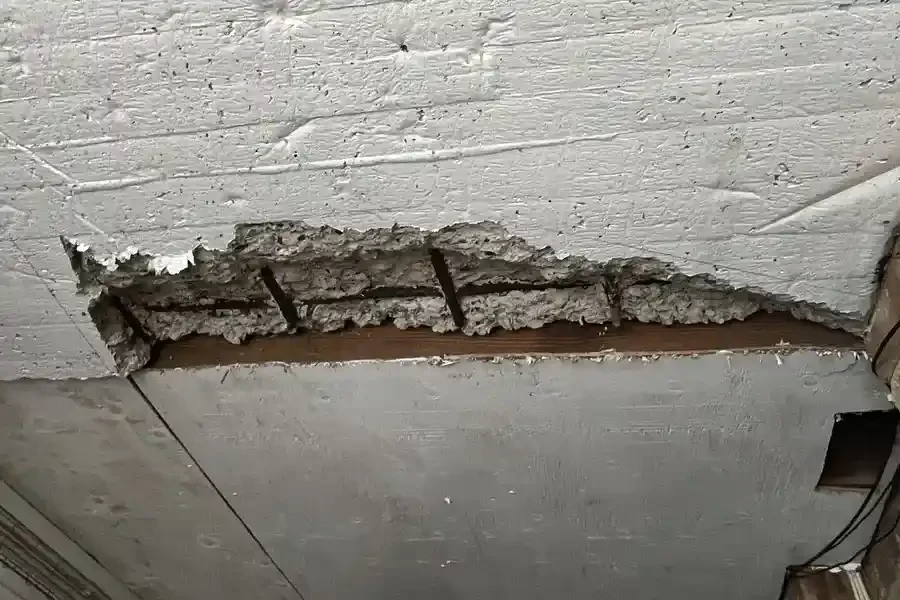
Concrete spalling occurs when pieces of concrete break away from the structure. This is commonly caused by reinforcement corrosion, freeze-thaw action, impact damage or long-term deterioration.
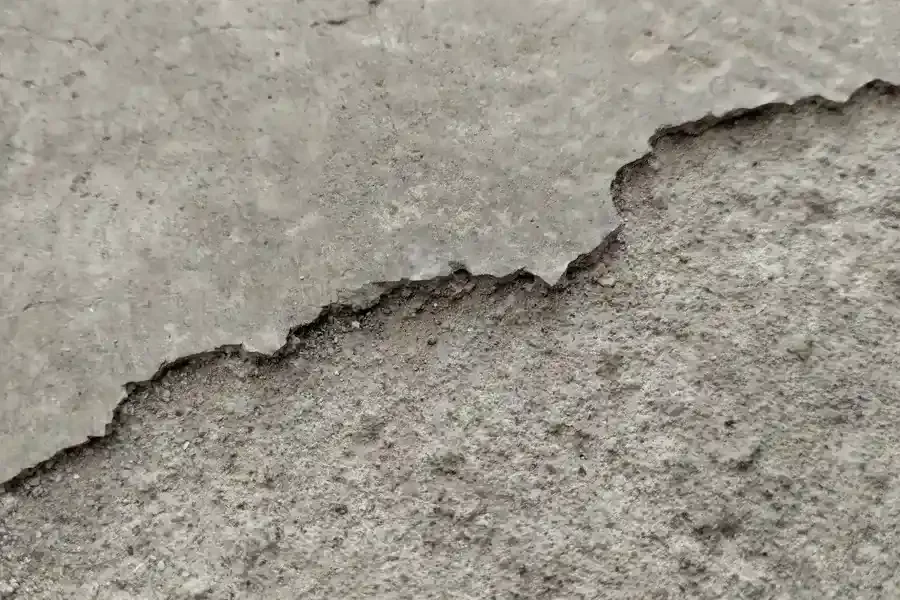
Typically, delamination will occur on the top of the slab (the floor), since this is the side the concrete is trowelled and finished on.
In reinforced concrete structures, corrosion of reinforcing steel can eventually cause the concrete cover to delaminate before progressing to full spalling. While the end result may appear similar, the underlying cause is very different from the surface delamination commonly seen in floor slabs.
The below images show the difference between delamination and concrete cancer/spalling
How Do You Identify Concrete Delamination?
One of the challenges with delamination is that it often cannot be identified through visual inspection alone if in its earlier stages.
Common signs include:
Hollow sounding concrete when tapped with a hammer
Drummy or hollow areas under foot traffic
Localised surface cracking
Thin flakes of concrete beginning to separate
Areas that feel loose or detached
Specialist contractors commonly use hammer sounding, chain dragging or other non-destructive testing methods such as Ground Penetrating Radar to accurately locate delaminated areas before repairs commence.
Does Concrete Delamination Need Repair?
It depends on the severity and intended use of the structure.
Minor areas in low-traffic environments may remain serviceable for some time, but the longer it is left the worse it will get.
As traffic, vibration and environmental exposure continue, the detached layer typically deteriorates further until pieces begin to break away.
For commercial and industrial floors, this can create:
Trip hazards
Reduced durability
Increased maintenance costs
Damage to equipment and floor finishes
Early intervention always results in simpler and more economical repairs.
How Is Concrete Delamination Repaired?
The appropriate repair method depends on the depth and extent of the defect.
Localised Delamination
Small areas are typically repaired by removing all loose or hollow concrete until sound material is reached. The repair area is then reinstated using a suitable cementitious repair mortar or structural repair material compatible with the surrounding concrete.
If delamination is caught early before major defects start becoming apparent on the surface it can be an option to drill a hole through the delaminated section and inject epoxy to bond the two sections back together. The surface can also be ground back to create a flat profile once the epoxy has cured.
Extensive Delamination
Where large areas are affected, more substantial repairs may be required. Depending on the condition of the slab options may include large scale patching or a full resurface.
Selecting the appropriate repair strategy depends on the size of the defect, loading requirements and long-term service expectations.
Can Concrete Delamination Be Prevented?
In most cases, yes.
Good construction practices significantly reduce the likelihood of delamination developing.
These include:
Allowing bleed water to dissipate before finishing.
Avoiding premature steel trowelling.
Monitoring environmental conditions during placement.
Using appropriate finishing techniques for the concrete mix.
Ensuring experienced concrete finishers are carrying out the work.
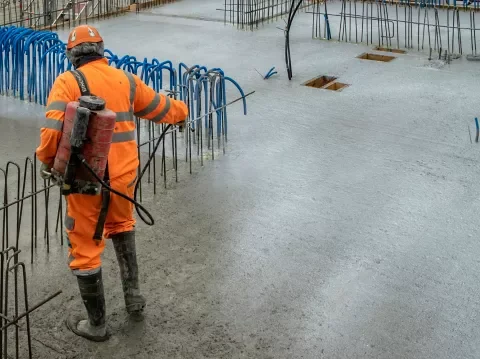
Use of curing compounds sprayed onto the slab to trap moisture.
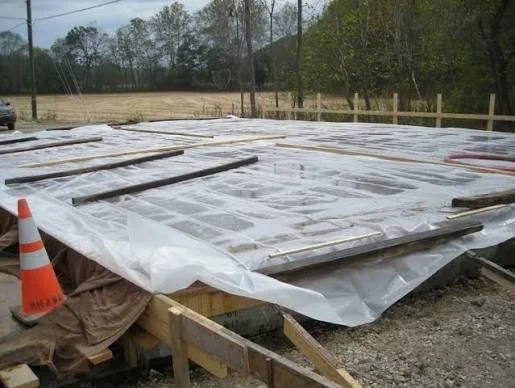
Covering the cured slab with plastic to trap moisture and reduce environmental factors such as solar and wind.
Proper timing during finishing, curing compounds or curing methodology (keeping moist, plastic covering etc.) are the most important aspects of preventing delamination.
Why Early Diagnosis Matters
Because delamination often develops beneath an apparently sound surface, many defects remain undetected until the concrete begins to fail.
Identifying hollow or poorly bonded concrete early allows repairs to be completed before deterioration progresses into larger, more disruptive and more expensive remediation works.
Whether it's a warehouse floor, suspended slab or commercial pavement, addressing delamination promptly helps maximise the service life of the concrete and maintain a safe, durable surface.
Need Expert Concrete Repair Advice?
If you've noticed hollow sounding concrete, surface deterioration or areas of concrete beginning to separate, TruBond Concrete Repairs can assess the condition of your structure and recommend the most appropriate repair solution.
From localised repairs to large-scale remedial concrete works, we deliver durable repair solutions that restore the integrity and performance of reinforced concrete structures across Sydney.