
Concrete Repair vs Demolition: Which Is the Better Option?
When concrete begins to crack, spall or deteriorate, many people assume the only solution is to demolish and replace it. In reality, complete demolition is often unnecessary.
Advances in concrete repair materials and remediation techniques mean that many damaged concrete structures can be successfully restored, extending their service life by decades while avoiding the cost and disruption of replacement.
However, repairs are not always the right solution. In some situations, demolition and reconstruction provide a better long-term outcome.
So how do you determine which approach is best?
When Can Concrete Be Repaired?
Most concrete deterioration is localised rather than widespread.
Provided the structure remains fundamentally sound, repairs can often restore both the structural integrity and durability of the affected area.
Concrete can commonly be repaired when:
Concrete spalling is localised.
Reinforcement corrosion is limited.
Cracks can be stabilised or repaired.
Water ingress can be effectively remediated.
Honeycombing or construction defects are isolated.
The structure remains structurally adequate.
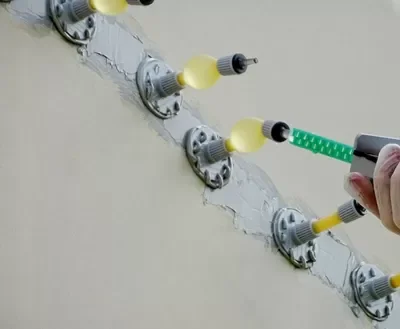
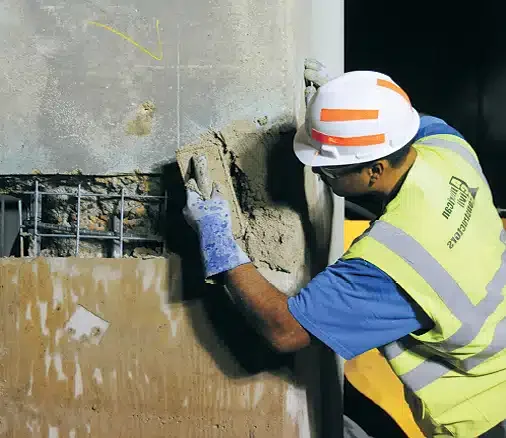
Modern repair systems allow contractors to remove only the deteriorated concrete while preserving the remainder of the structure. This approach is often significantly more economical than replacing an entire slab, wall or beam.
When Is Demolition the Better Option?
There are situations where repair is no longer practical or cost-effective.
Complete replacement may be the preferred solution where:
Deterioration is extensive throughout the structure.
Reinforcement has suffered severe section loss.
Structural capacity can no longer be restored economically.
The original concrete is of consistently poor quality.
Repair costs approach or exceed replacement costs.
The structure no longer satisfies current engineering or design requirements.
In these circumstances, demolition may provide a longer-lasting and more economical outcome over the life of the asset.
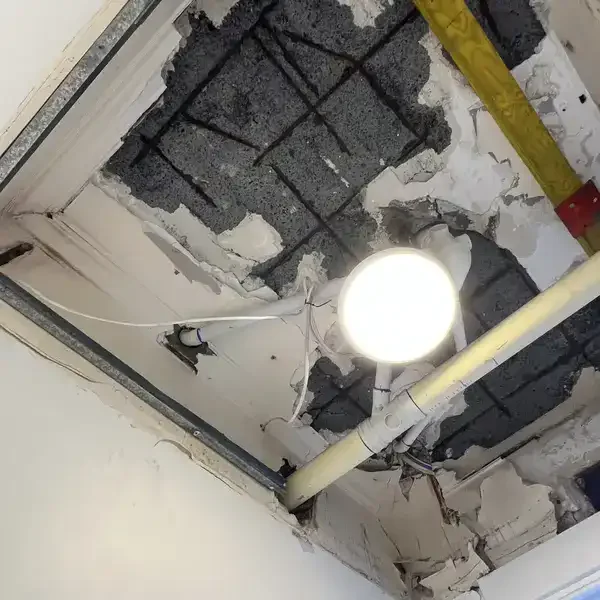
An example of widespread concrete cancer undermining the structural integrity of a slab. Full replacement required.
Factors That Influence the Decision
Every structure should be assessed individually before deciding whether to repair or replace, with some of the most important considerations being:
Extent of Deterioration
A single spalled area on a balcony requires a very different approach to widespread corrosion affecting an entire façade or slab. Understanding how far the deterioration has progressed is essential before selecting a repair strategy.
Structural Integrity
Not every defect affects the strength of a structure. Some issues are primarily cosmetic, while others require engineering assessment to determine whether structural repairs or strengthening are necessary.
A professional inspection helps distinguish between the two.
Cost
Repair is often considerably less expensive than demolition.
In addition to construction costs, replacement frequently involves:
Demolition works.
Waste disposal.
Temporary support.
Extended project durations.
Replacement finishes.
Increased disruption to occupants or operations.
Repairing only the affected areas can often deliver substantial cost savings while achieving the same functional outcome.
Programme and Downtime
For commercial buildings, industrial facilities and infrastructure assets, time is often just as important as cost. Concrete repairs can usually be completed much faster than demolition and reconstruction, reducing disruption to occupants, businesses and construction programmes.
This is particularly valuable where maintaining access or keeping facilities operational is a priority.
Heritage and Architectural Finishes
Many buildings feature exposed architectural concrete or heritage elements that would be difficult or impossible to replicate through demolition and replacement.
Specialist repair techniques can often preserve the original appearance while restoring durability and structural performance.
Benefits of Concrete Repair
When appropriate, repairing existing concrete offers several advantages.
These include:
Lower construction costs.
Faster project completion.
Reduced disruption.
Less demolition waste.
Lower environmental impact.
Preservation of existing structures.
Extended service life.
Improved asset value.
Repairing concrete rather than replacing it also supports more sustainable construction by reducing material consumption and landfill waste.
When Early Repairs Make the Biggest Difference
One of the biggest mistakes property owners make is delaying repairs until deterioration becomes extensive. Small defects such as localised spalling, cracking or reinforcement corrosion are often straightforward to repair. If left untreated, these defects continue to worsen, increasing repair costs and, in some cases, eventually making demolition unavoidable.
Early intervention not only reduces costs but also extends the service life of the structure.
The Importance of a Professional Assessment
No two concrete structures deteriorate in the same way.
A proper assessment considers:
The cause of the deterioration.
The condition of the reinforcing steel.
The extent of concrete damage.
Structural requirements.
Long-term durability.
Repair versus replacement costs.
Only after understanding these factors can an informed decision be made regarding the most appropriate solution.
Need Advice on Whether Your Concrete Can Be Repaired?
If you're unsure whether your damaged concrete requires repair or complete replacement, TruBond Concrete Repairs can assess the condition of your structure and provide practical, cost-effective recommendations. Our team specialises in diagnosing concrete deterioration and delivering tailored repair solutions that restore structural integrity while avoiding unnecessary demolition wherever possible.
Where replacement is genuinely the better long-term option, we'll tell you. Our goal is to recommend the solution that delivers the best outcome for your project—not simply the biggest scope of work.