
Types of Concrete Cracks Explained
Concrete is one of the strongest and most durable construction materials available, but almost every concrete structure will develop cracks at some stage during its service life. The presence of a crack does not necessarily indicate a structural problem. Some cracks are a normal part of the curing process, while others can indicate significant structural movement or deterioration requiring immediate attention.
Understanding the different types of concrete cracks is the first step in determining whether a crack can be safely monitored or requires professional repair.
Are All Concrete Cracks a Problem?
No. Many concrete cracks are purely cosmetic and have little impact on the structural performance of the concrete. However, some cracks can allow water to enter the structure, accelerate concrete deterioration and provide a direct pathway for moisture, oxygen and carbon dioxide to reach the reinforcing steel.
The cause, width, location and behaviour of a crack are all important factors when assessing its significance.
Concrete Crack Width Classifications
While crack width alone does not determine whether a crack is structural, it provides a useful starting point when assessing the severity of cracking.
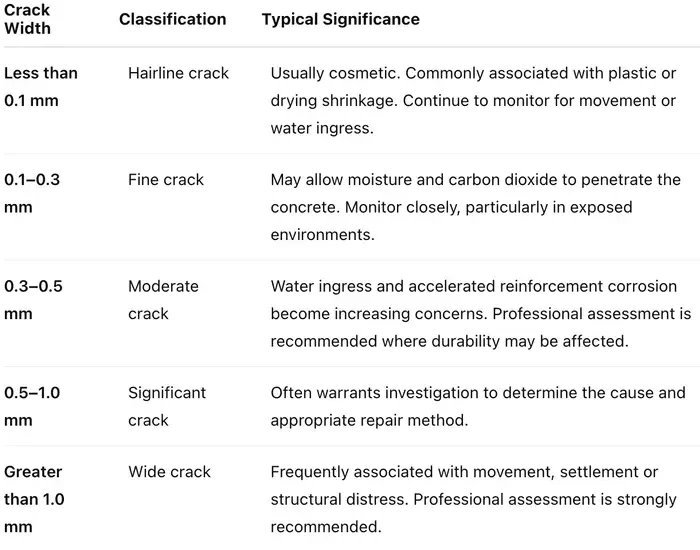
It is important to remember that the cause of the crack is always more important than its width. A very fine crack that continues to widen may indicate an active structural issue, while a wider crack that has remained unchanged for many years may simply reflect historic movement.
Why Crack Width Matters
Although many concrete cracks are not immediately structural concerns, any crack wider than a hairline has the potential to reduce the long-term durability of reinforced concrete. Cracks provide a pathway for water, oxygen and airborne carbon dioxide to penetrate deeper into the concrete than they otherwise could.
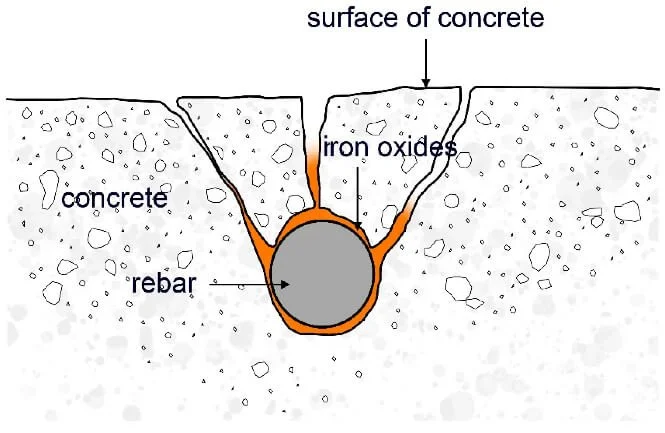
As carbon dioxide enters the concrete, it accelerates the carbonation process, gradually reducing the concrete's natural alkalinity. Once carbonation reaches the reinforcing steel, the protective environment surrounding the reinforcement is lost, allowing corrosion to begin in the presence of moisture and oxygen.
If chlorides are also present—such as in coastal environments, marine structures or around swimming pools—the corrosion process can accelerate even further.
As reinforcing steel corrodes, it expands significantly in volume, creating internal pressure that can eventually lead to:
Reinforcement corrosion
Concrete delamination
Concrete spalling
Reduced structural durability
More extensive and costly repairs
For this reason, cracks should never be assessed solely on their structural significance. Even relatively fine cracks can shorten the service life of a concrete structure if they allow ongoing ingress of contaminants.
1. Shrinkage Cracks
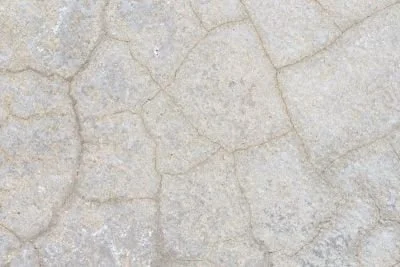
Plastic shrinkage cracks occur shortly after concrete is placed, before it has fully hardened. They develop when moisture evaporates from the surface faster than it can be replaced by bleed water, causing the surface concrete to shrink.
These cracks are usually:
Random in pattern.
Relatively shallow.
Narrow in width.
Most common during hot, windy or low-humidity conditions.
While often cosmetic, excessive plastic shrinkage cracking can reduce durability by providing pathways for moisture and contaminants.
Credit to a1concrete.com
2. Settlement Cracks
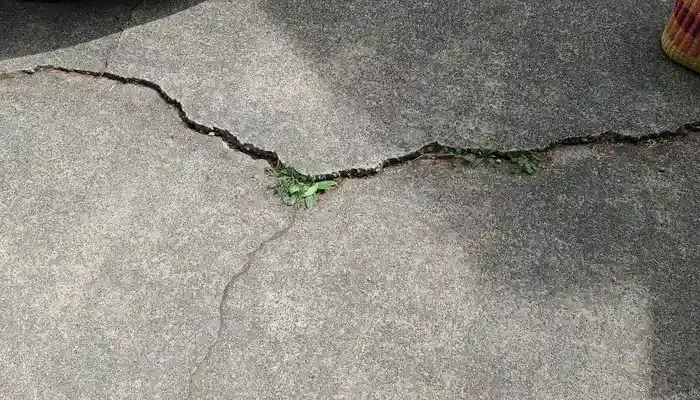
Settlement cracks occur when the supporting ground beneath a concrete element moves or consolidates unevenly.
They are commonly associated with:
Poorly compacted fill.
Reactive clay soils.
Erosion.
Changes in groundwater conditions.
Settlement cracks often continue to widen if the underlying movement has not stabilised and should be professionally assessed where ongoing movement is suspected. It is common in driveways and footpaths where subgrade has not been compacted correctly or deteriorated over time. Slab jacking can fix height differences between the cracked concrete elements.
Credit to scribeware.com
3. Structural Cracks
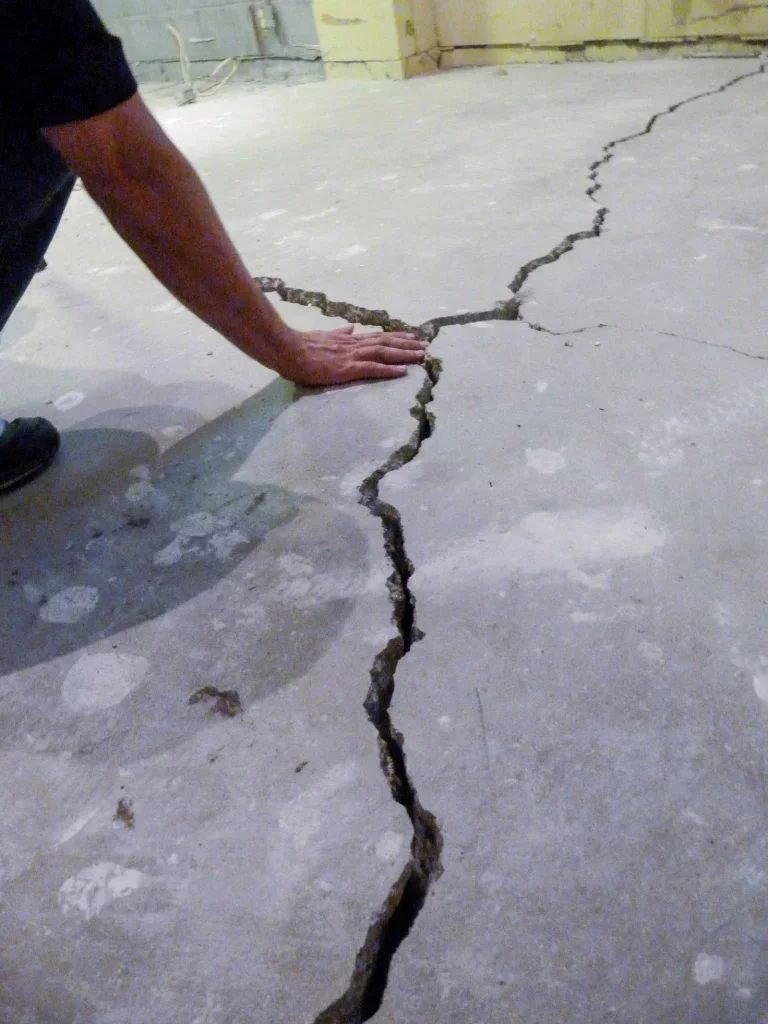
Structural cracks occur when loads exceed the capacity of the concrete or reinforcing steel.
These cracks may result from:
Overloading.
Foundation movement.
Design deficiencies.
Construction defects.
Impact damage.
Structural cracks are often wider than cosmetic cracks and may continue to propagate over time.
Any crack associated with noticeable movement, deflection or displacement should be inspected by a qualified professional before repairs are undertaken.
Credit to truelevelconcrete.ca
4. Corrosion-Induced Cracks
When reinforcing steel corrodes, it expands significantly in volume. This expansion creates internal pressure within the surrounding concrete, causing cracks to develop directly above the reinforcing steel.If left untreated, corrosion-induced cracking often progresses to concrete delamination and eventually concrete spalling.
Common warning signs include:
Long, straight cracks following reinforcement.
Rust staining.
Hollow sounding concrete.
Concrete breaking away from the surface.
These cracks should be addressed promptly to prevent further deterioration.
5. Crazing cracks
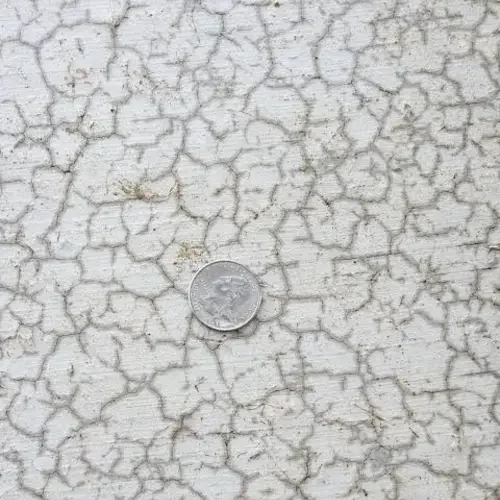
Crazing cracks belong in the same category as shrinkage cracks, when the surface dries too quickly and the top layer dries faster than the layer underneath. Best curing practises such as sealer, soaking the slab over the following days and covering with plastic or wet hessian to trap moisture and protect from wind the sun is the best way to prevent this from occuring.
These cracks are typically harmless and not treated. Decorative coatings can be used if desired, such as coloured sealer or spraycrete.
Which Cracks Require Repair?
Not every crack requires immediate remediation, but every crack should be assessed based on its cause, behaviour and potential impact on durability.
Professional assessment is recommended where:
The crack is widening over time.
The crack exceeds approximately 0.3 mm in exposed reinforced concrete.
The crack is associated with structural movement.
Rust staining is present.
Multiple cracks are developing in the same area.
The crack presents a durability or safety concern.
Identifying why the crack developed is often more important than simply repairing the visible opening.
Common Concrete Crack Repair Methods
The appropriate repair method depends on the cause and behaviour of the crack:
Epoxy Injection
Used to restore structural continuity where dormant cracks require bonding. It is high strength and extremely rigid, meaning it should not be injected into cracks that have any movement. Is the ideal choice for structural crack repair.
Polyurethane Injection
A great solution for non-structural movement cracks, the polyurethane is semi-rigid, sealing the crack and moving with it. Commonly used to seal active water leaks by injecting resin that expands and effectively “blocks” the crack entirely.
Crack Stitching
Helical reinforcement bars made of carbon fibre or steel are installed across the crack to restore structural integrity, tensile strength and distribute loads. Used in conjunction with epoxy injection, the crack is remediated via chemical and mechanical fixings. Without reliance on only the epoxy to bond the slabs back together, it can be an excellent repair method in the right circumstances. This method is particularly effective where concrete or masonry has experienced localised movement.
Routing and Sealing
Suitable for non-structural cracks where preventing ingress of contaminants and protecting the reinforcement are the primary objectives. Involves the routing out the crack enough for it to receive the repair material.
Can Concrete Cracks Be Prevented?
While not every crack can be avoided, good design and construction practices significantly reduce the risk.
These include:
Proper concrete curing.
Appropriate reinforcement detailing.
Adequate joint spacing.
Good subgrade preparation.
Correct concrete mix design.
Effective drainage.
Timely maintenance of waterproofing systems.
Early intervention also helps prevent small defects from developing into more significant structural problems.
Need Advice on a Cracked Concrete Structure?
Whether you're dealing with a leaking basement, a cracked suspended slab, a deteriorating balcony or a structural concrete element, understanding the cause of the crack is essential before selecting a repair method.
At TruBond Concrete Repairs, we assess concrete cracks based on their cause, behaviour, structural significance and long-term durability before recommending a tailored repair solution. From patching to crack injection and structural concrete repairs, we provide durable remediation solutions for residential, commercial and civil projects across Sydney.