
How Coastal Environments Damage Reinforced Concrete
Australia's coastline is one of its greatest assets, but for reinforced concrete structures it presents one of the harshest operating environments. Apartment buildings, commercial properties, marine structures and waterfront developments are continually exposed to airborne salt, moisture and changing weather conditions that accelerate concrete deterioration.
While reinforced concrete is an extremely durable construction material, prolonged exposure to coastal conditions can significantly shorten its service life if defects are not identified and repaired early. Understanding how coastal environments affect reinforced concrete is essential for protecting buildings from costly structural repairs.
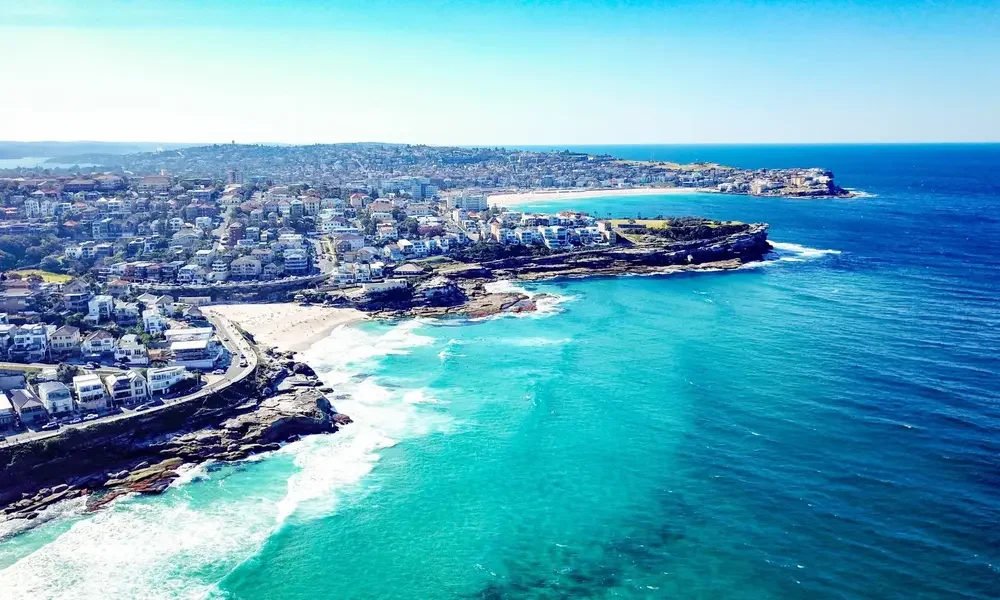
Why Coastal Environments Are So Aggressive
The primary cause of deterioration in coastal reinforced concrete is chloride-induced reinforcement corrosion.
As waves break along the shoreline, microscopic salt particles become airborne and are carried inland by coastal winds. These chlorides settle on exposed concrete surfaces where, over time, they gradually penetrate into the concrete.
Unlike rainwater alone, chlorides have the ability to break down the passive protective layer surrounding reinforcing steel. Once this protective layer is compromised, corrosion can begin in the presence of moisture and oxygen.
Buildings located directly on the waterfront experience the highest exposure, but chloride contamination can also affect structures hundreds of metres from the coastline, particularly where prevailing sea breezes regularly carry salt-laden air inland.
How Reinforced Concrete Protects Steel
Many people assume reinforcing steel begins rusting as soon as it is cast into concrete. In reality, concrete provides excellent protection.
Concrete is naturally highly alkaline, creating a passive environment around the reinforcing steel that prevents corrosion from occurring. As long as this alkaline environment remains intact and aggressive contaminants cannot reach the reinforcement, the steel can remain protected for many decades.
Problems begin when chlorides penetrate through the concrete or when carbonation reduces the concrete's alkalinity. Once the protective environment surrounding the reinforcement is lost, corrosion can develop.
Chloride-Induced Reinforcement Corrosion
When reinforcing steel begins to corrode, it expands significantly in volume compared to the original steel.
This expansion creates enormous internal pressure within the surrounding concrete. Because concrete has relatively low tensile strength, it cannot accommodate this pressure indefinitely.
Over time, the corrosion process typically follows this sequence:
Chlorides penetrate the concrete.
The passive protective layer surrounding the reinforcement breaks down.
Reinforcing steel begins to corrode.
Rust expands and creates internal pressure.
Concrete cracks develop above the reinforcement.
Concrete delaminates from the substrate.
Concrete spalls, exposing the reinforcement to even greater levels of moisture and chlorides.
By the time rust staining or concrete spalling becomes visible, reinforcement corrosion has often been progressing beneath the surface for many years.
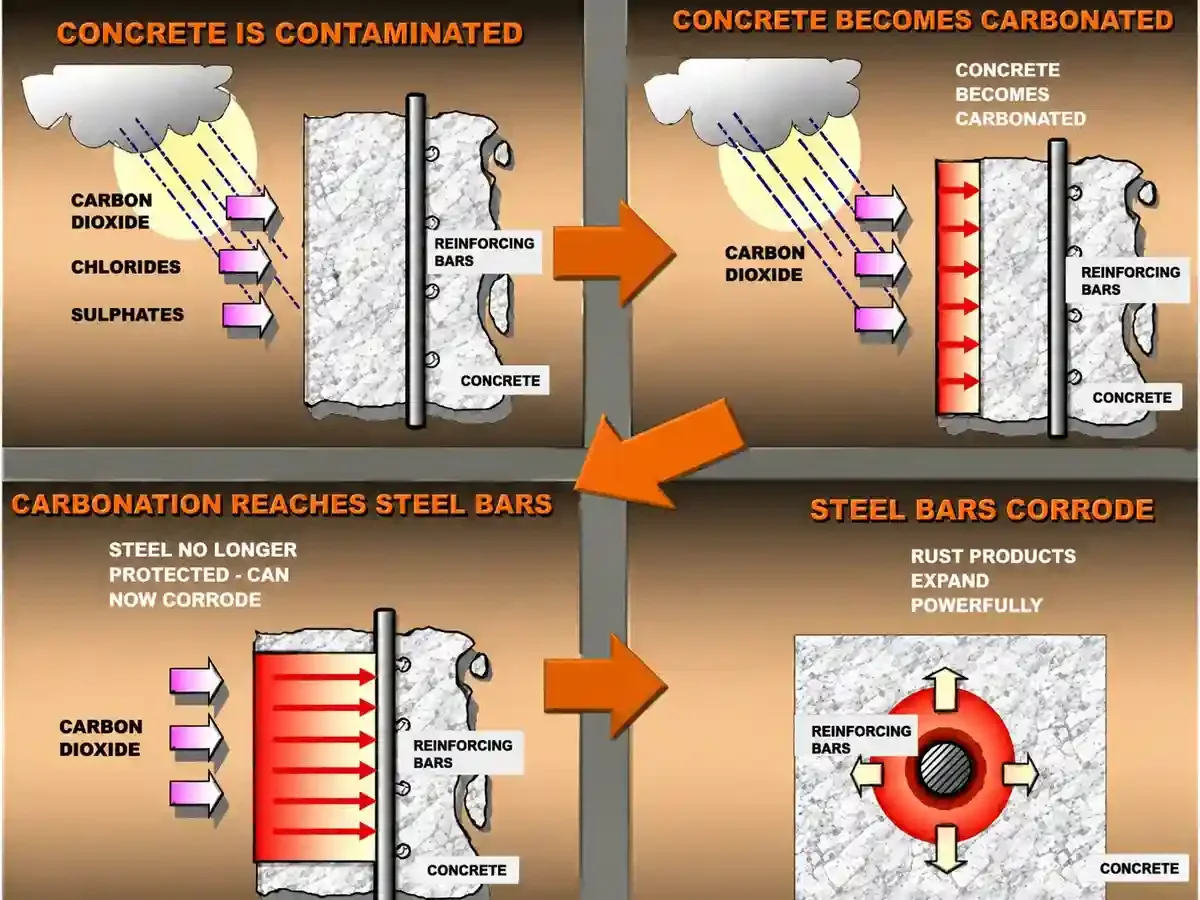
Carbonation in Coastal Structures
Although chlorides are generally the primary cause of reinforcement corrosion in coastal environments, carbonation can also contribute to concrete deterioration.
Carbon dioxide from the atmosphere gradually penetrates the concrete and reacts with the cement paste, reducing the concrete's natural alkalinity. Once carbonation reaches the reinforcing steel, the protective environment surrounding the reinforcement is lost.
Where carbonation and chloride exposure occur together, deterioration can progress more rapidly than either mechanism acting alone.
Why Concrete Cracks Matter
Concrete naturally develops small cracks throughout its service life. While many of these cracks are not structural concerns, they can significantly reduce the durability of reinforced concrete in coastal environments.
Cracks provide direct pathways for chlorides, moisture, oxygen and carbon dioxide to penetrate deeper into the concrete than would otherwise be possible. This allows aggressive contaminants to reach the reinforcing steel much sooner, accelerating reinforcement corrosion.
For this reason, even relatively fine cracks should not be ignored. Left untreated, they can substantially shorten the service life of reinforced concrete structures by increasing the rate of chloride ingress and carbonation.
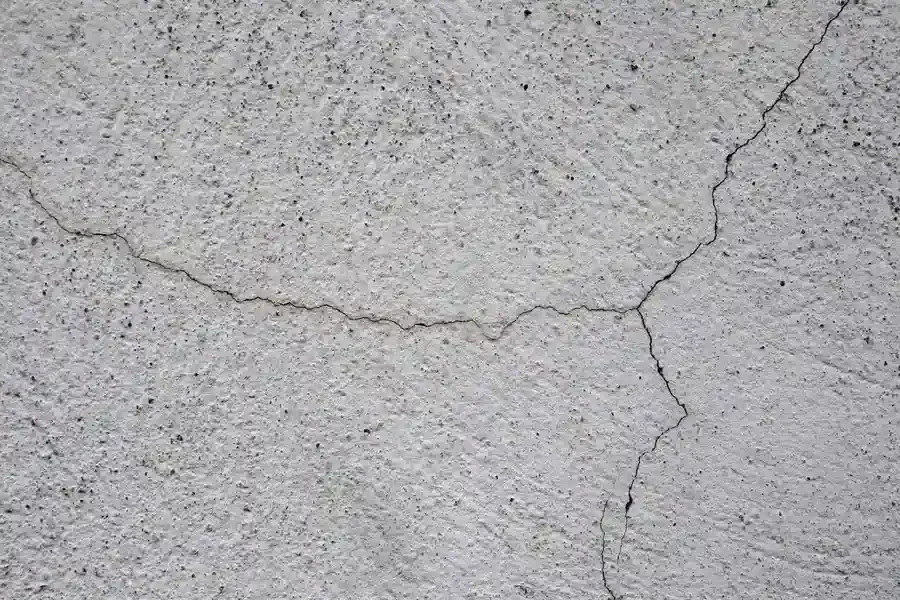
Even though the cracks themselves are non-structural, the pathway they provide for contaminants accelerates and causes real damage to the structure over time
Areas Most Susceptible to Coastal Deterioration
Some parts of a structure experience greater exposure than others and are therefore more susceptible to reinforcement corrosion.
These commonly include:
Balcony edges and soffits
Suspended concrete slabs
Building façades
Roof slabs
Retaining walls
Basement entry ramps
Car parks
Marine and waterfront structures
These elements often experience repeated wetting and drying cycles, which accelerate chloride penetration and increase the likelihood of reinforcement corrosion.
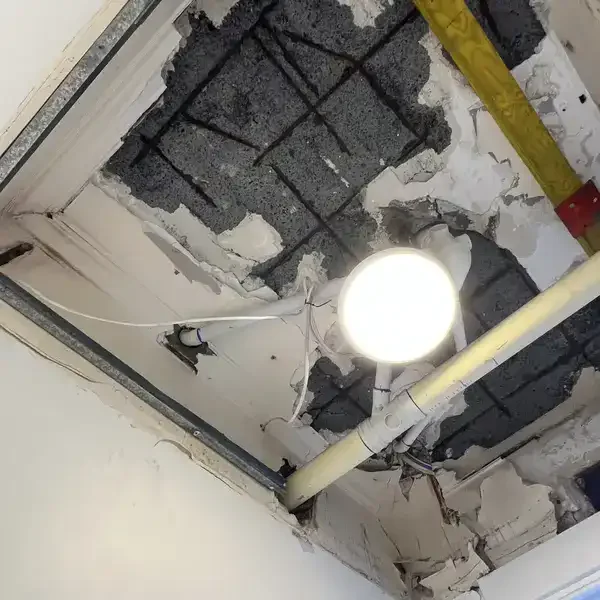
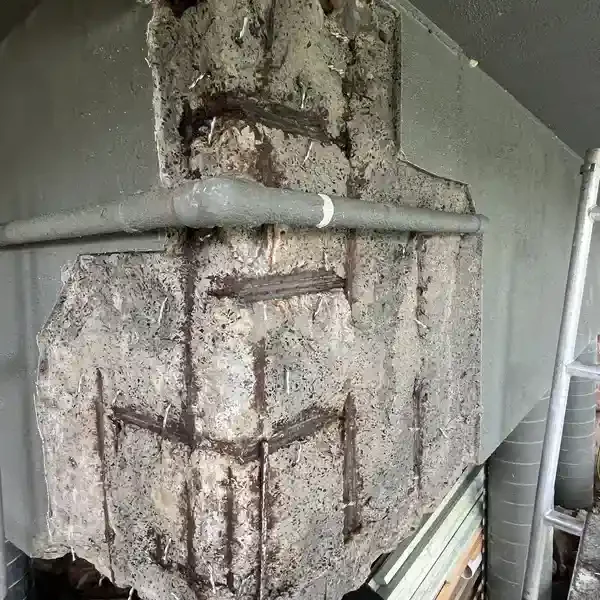
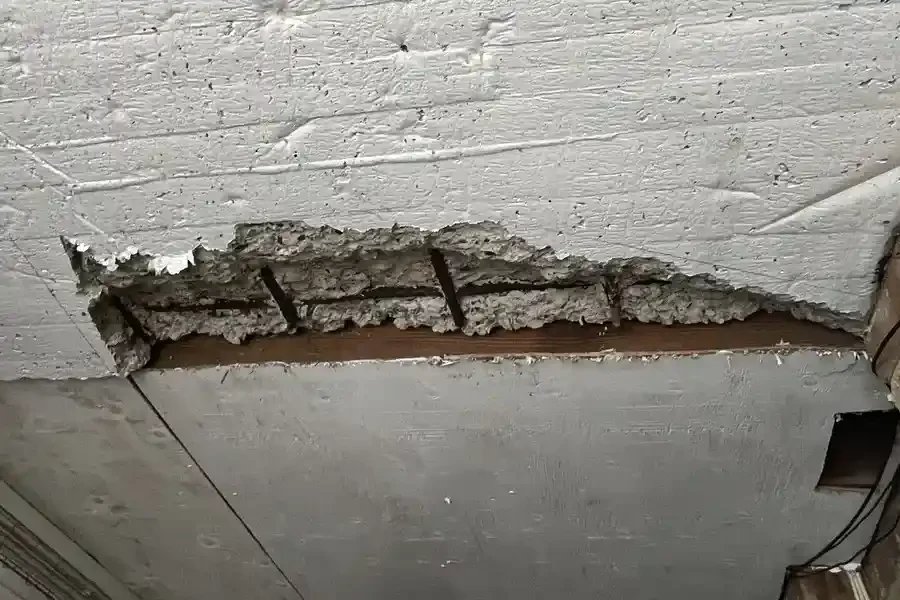
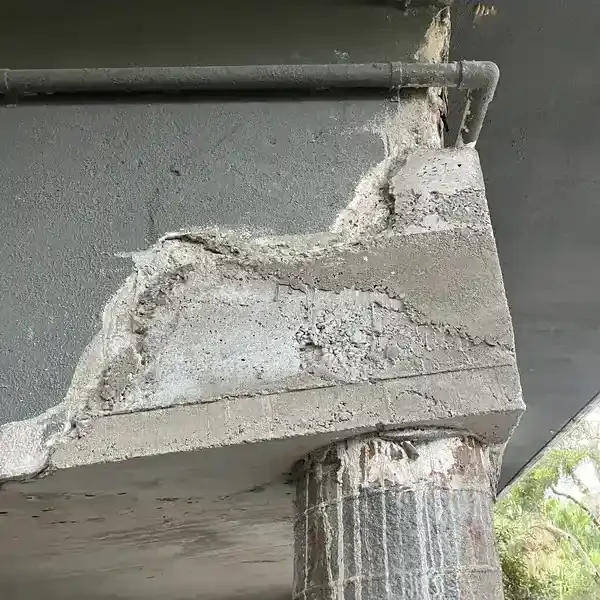
Common Signs of Coastal Concrete Deterioration
Concrete deterioration often develops slowly, making early detection particularly important.
Common warning signs include:
Rust staining on the concrete surface
Concrete cracking
Hollow sounding concrete
Concrete delamination
Concrete spalling
Exposed reinforcing steel
Water ingress
Loose or drummy concrete
Professional assessment at the first sign of deterioration can significantly reduce repair costs and prevent further structural damage.
Protecting Existing Coastal Structures
Although coastal exposure cannot be eliminated, proactive maintenance can dramatically extend the service life of reinforced concrete buildings.
Regular Condition Inspections
Routine inspections allow early signs of deterioration to be identified before corrosion becomes widespread. Small cracks, rust staining and localised spalling are often the first visible indicators that reinforcement corrosion has begun beneath the surface.
Repair Cracks Promptly
Cracks should be assessed and repaired where necessary to minimise the penetration of chlorides, moisture and carbon dioxide. Preventing these contaminants from reaching the reinforcement helps slow the corrosion process and preserve the durability of the structure.
Maintain Protective Coating Systems
Protective coatings and anti-carbonation coatings provide an additional barrier against moisture, chlorides and atmospheric carbon dioxide. These systems should be inspected periodically and recoated when required to maintain their effectiveness. Maintaining a protective coating system is often significantly more economical than undertaking extensive concrete repairs after corrosion has developed.
Maintain Waterproofing Systems
Balconies, roof slabs, podium decks and planter boxes rely on waterproof membranes to prevent water entering the concrete structure. Damaged or ageing membranes should be repaired or replaced promptly to minimise the risk of water accelerating reinforcement corrosion.
Repair Localised Defects Early
Concrete spalling, exposed reinforcement and localised corrosion should never be ignored. Early repairs are typically less disruptive and considerably more cost-effective than allowing deterioration to spread throughout the structure.
Need Help Repairing Coastal Concrete?
If your building is showing signs of concrete cracking, rust staining, spalling or reinforcement corrosion, early intervention can help prevent further deterioration and avoid more extensive structural repairs.
At TruBond Concrete Repairs, we specialise in diagnosing and repairing reinforced concrete affected by coastal exposure. From localised concrete repairs and crack remediation to large-scale structural restoration and protective coating systems, we provide durable repair solutions that help extend the service life of concrete structures across Sydney.