
Why Basement Walls Leak: Underground Car Parks and Concrete Structures
Water ingress is one of the most common defects affecting basements, underground car parks and other below-ground reinforced concrete structures. Leaks can range from minor damp patches and efflorescence through to active streams of water entering through construction joints, cracks and penetrations.
Unlike many above-ground leaks, basement water ingress is often driven by groundwater and hydrostatic pressure acting against the outside of the structure. This can make leaks particularly persistent in large commercial basements and multi-level underground car parks, where the original external waterproofing system may be buried behind the structure and impossible to access without major excavation.
Effective basement waterproofing repairs therefore require more than simply sealing the location where water appears. The cause of the leak, the construction of the structure and the pathway the water is taking all need to be considered.
Hydrostatic Pressure and Underground Structures
Basement walls and slabs are continually exposed to moisture within the surrounding ground. During prolonged rainfall or where a high water table exists, groundwater can build up against the structure and create hydrostatic pressure.
Water under pressure will exploit available pathways through cracks, construction joints, penetrations and defects in the concrete. The deeper a basement extends below the surrounding groundwater level, the greater the potential pressure acting against the structure.
This is particularly relevant to multi-level underground car parks and commercial basement structures, where walls and slabs may be located several levels below ground.
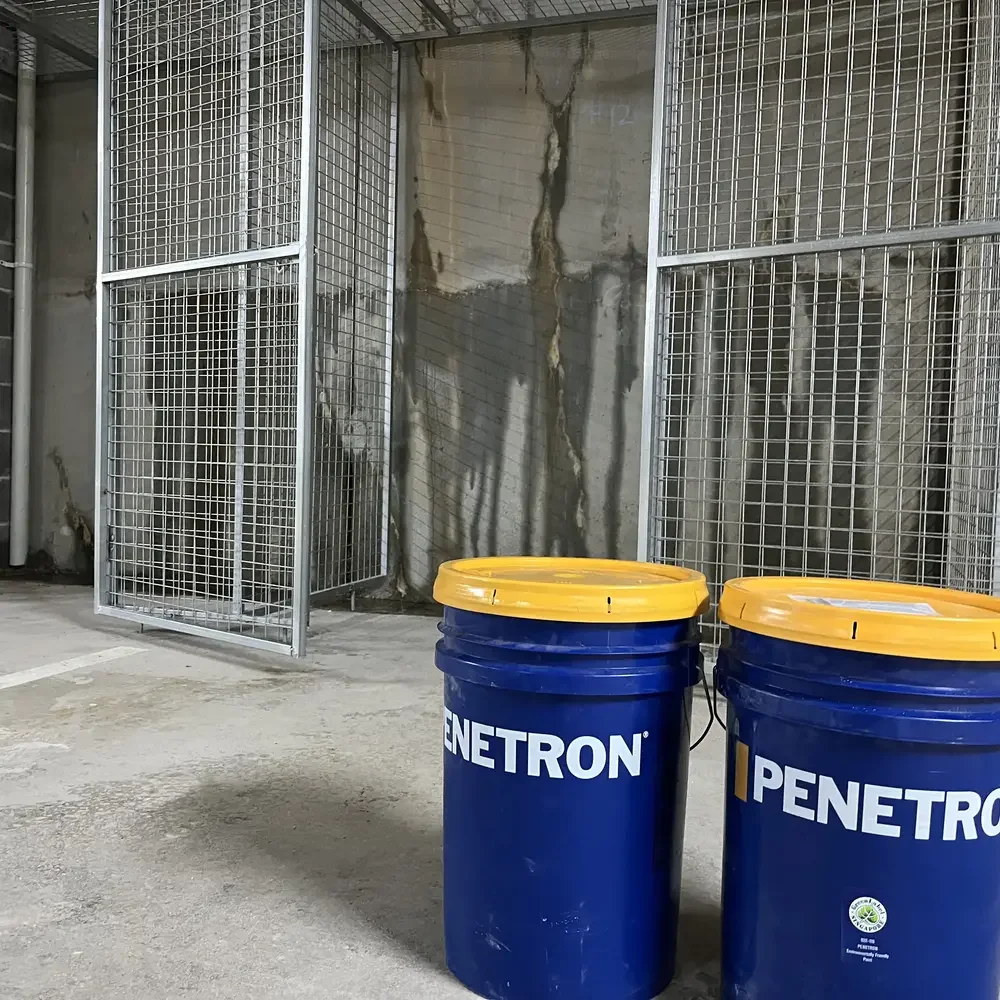
Construction Joints and Wall-to-Slab Junctions
Construction joints are one of the most common sources of basement water ingress. Large reinforced concrete structures cannot generally be poured as one continuous element, meaning deliberate interfaces are created between separate concrete placements.
These include wall-to-slab junctions, vertical and horizontal wall joints, slab construction joints and interfaces between shotcrete and conventionally poured concrete.
Waterstops, hydrophilic seals and other waterproofing details are typically incorporated into these joints during construction. If these systems are damaged, incorrectly installed or bypassed by a concrete defect, groundwater can travel through the joint.
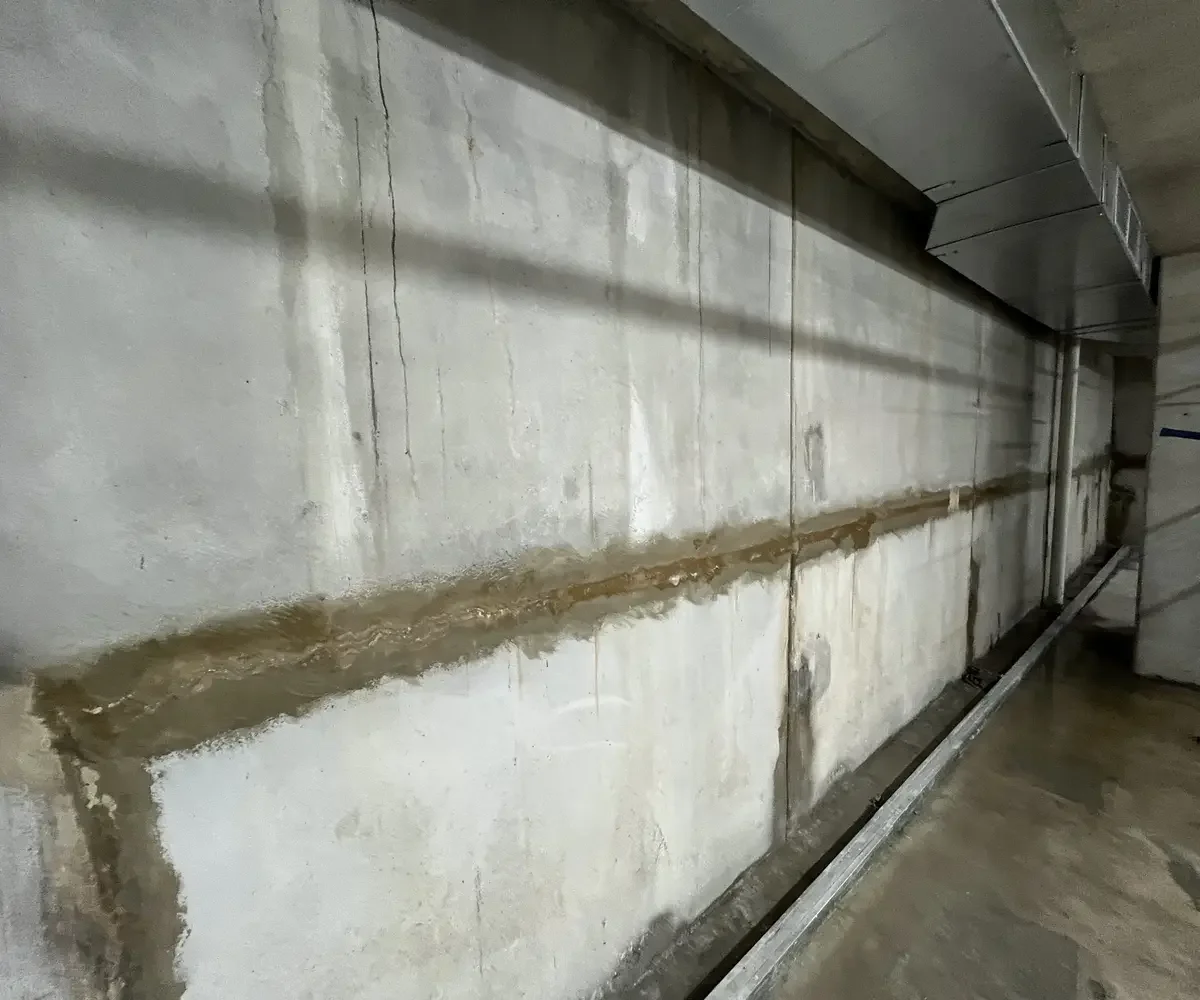
The wall-to-slab junction is particularly susceptible. When waterproofing at this interface fails, water can appear continuously along the perimeter of an underground car park, often becoming substantially worse after periods of heavy rainfall.
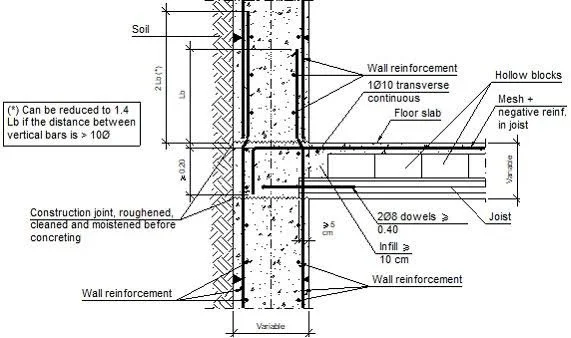
CJ where wall sits on slab is an entry point for groundwater
Cracks, Honeycombing and Concrete Defects
Not every leaking basement wall has a failed membrane. The concrete structure itself can provide pathways for water.
Reinforced concrete naturally develops cracks due to shrinkage, thermal movement, restraint and structural loading. While a crack may not represent a structural concern, a crack extending through a below-ground wall can provide a direct pathway for groundwater.
Honeycombing and poorly consolidated concrete can create similar problems. Interconnected voids within the concrete can allow water to travel through a wall even when no obvious surface crack is visible.
This is particularly important when investigating water ingress through shotcrete basement walls. Construction joints, anchor locations, poorly consolidated areas and interfaces with adjoining concrete elements can all become potential leakage points.
Anchors, Tie Holes and Service Penetrations

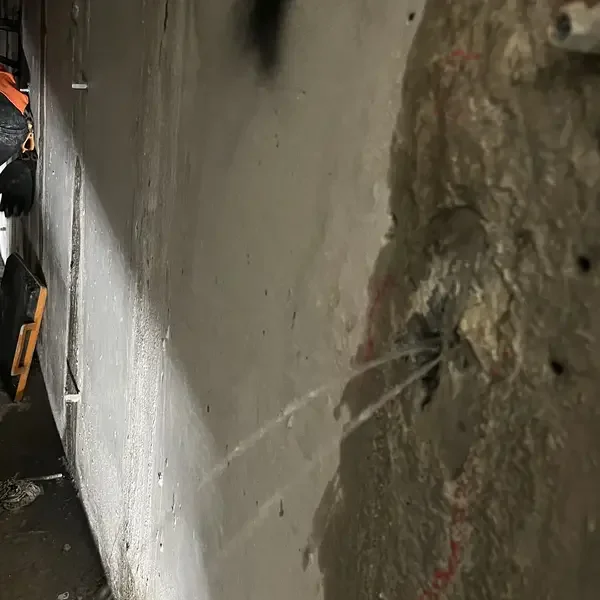
Large basement structures can contain hundreds of penetrations through concrete walls, including temporary anchors, formwork tie locations, pipes, conduits and other building services.
Each penetration interrupts the concrete or waterproofing system and must be appropriately detailed and sealed. Even a relatively small defect can become a significant source of water ingress when groundwater pressure develops behind the wall.
For this reason, isolated leaking penetrations are commonly encountered during remedial waterproofing works in underground car parks and commercial basements.
Failure of External Waterproofing
Many below-ground structures incorporate a waterproofing membrane on the external, or positive, side of the concrete.
Damage during construction, defective joints, poorly detailed penetrations or inadequate membrane terminations can allow groundwater to bypass the waterproofing system and reach the concrete structure.
The difficulty with an existing basement is accessibility. Once construction is complete, the membrane may be buried several metres underground behind retaining walls, neighbouring buildings, roads or landscaping. Excavating the outside of a multi-level underground car park can therefore be extremely expensive or physically impossible.
This is one of the fundamental differences between large-scale remedial basement waterproofing and conventional waterproofing work.
Why the Visible Leak May Not Be the Source
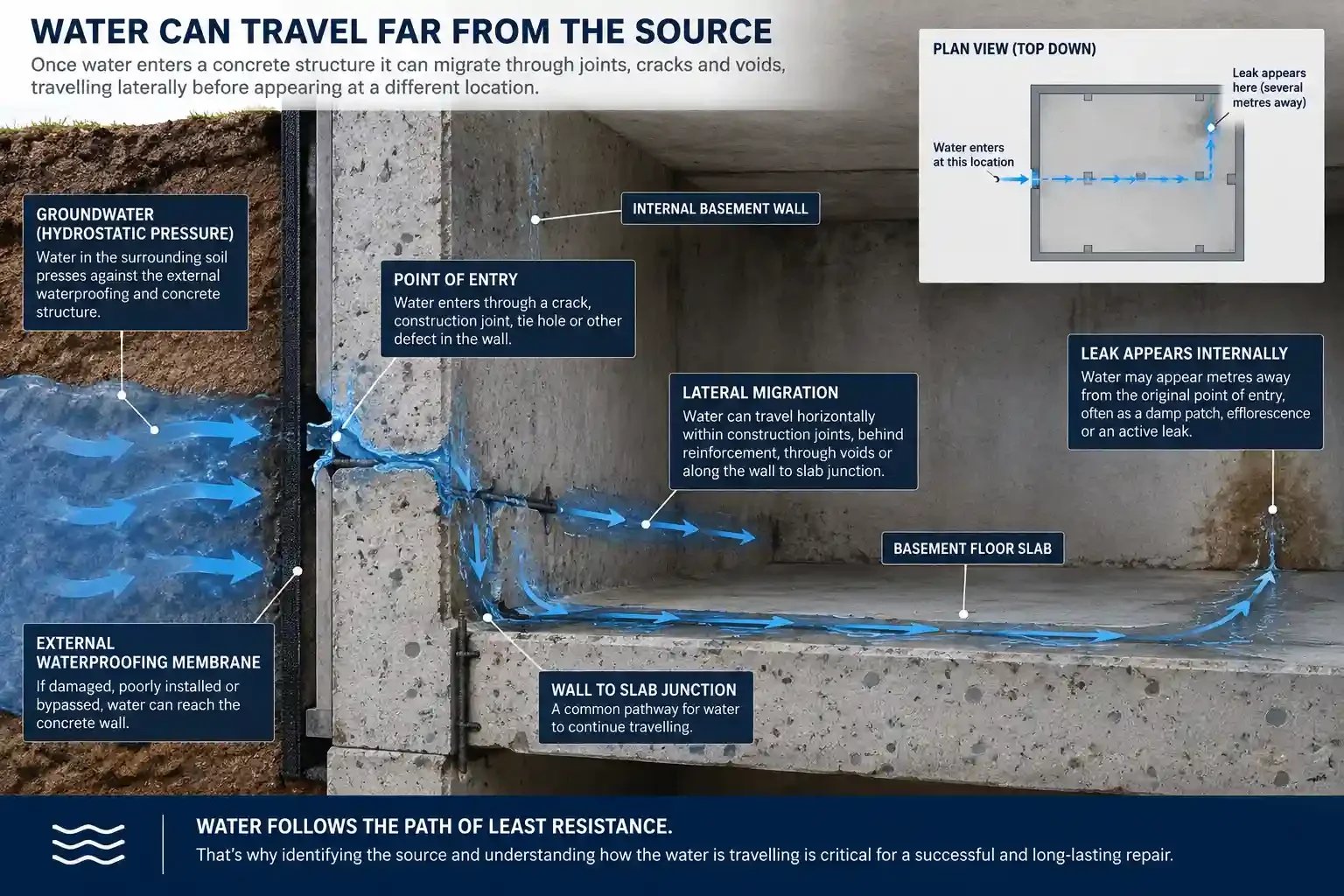
Water does not necessarily travel directly through a wall.
Once it enters behind a waterproofing system, it can migrate along construction joints, membrane interfaces, reinforcement and voids within defective concrete before eventually finding somewhere to escape.
The wet area visible inside the basement may therefore be several metres from the original point of entry.
This is why simply applying sealant or waterproof coating over a damp area often fails. A proper water ingress investigation needs to establish how water is entering the structure and the pathway it is following.
What Happens if Basement Water Ingress Is Left Untreated?
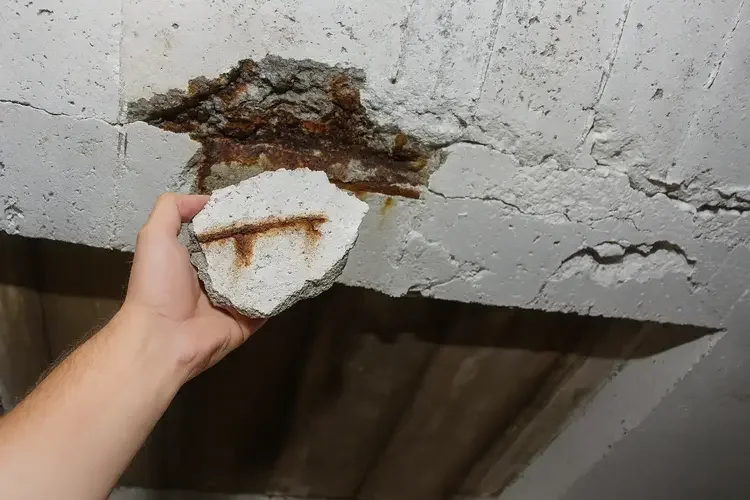
Persistent water ingress can cause more than staining and inconvenience. Water entering reinforced concrete can contribute to reinforcement corrosion, particularly where cracks and defects allow moisture, oxygen and contaminants to penetrate deeper into the structure.
Over time this can contribute to cracking, concrete delamination and spalling. Ongoing leaks can also cause efflorescence, damage coatings and finishes, create slip hazards and affect electrical or mechanical equipment within basement plant areas.
For strata buildings, commercial developments and infrastructure assets, early remediation can prevent relatively minor water ingress defects from developing into considerably larger maintenance problems.
How Are Leaking Basement Walls Repaired?
The appropriate repair method depends on the defect and the pathway through which water is travelling. Because the external waterproofing is often inaccessible on completed structures, remedial basement waterproofing repairs frequently need to be undertaken from the inside, or negative side, of the basement.
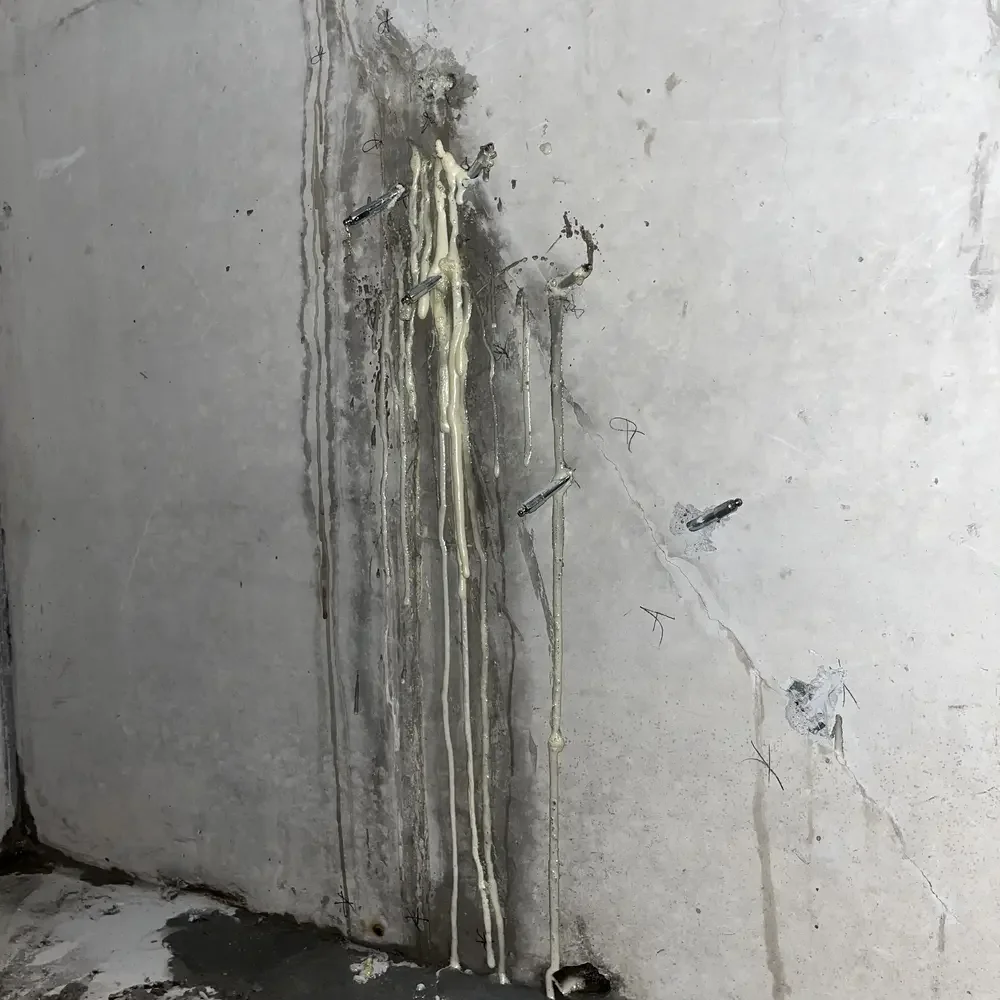
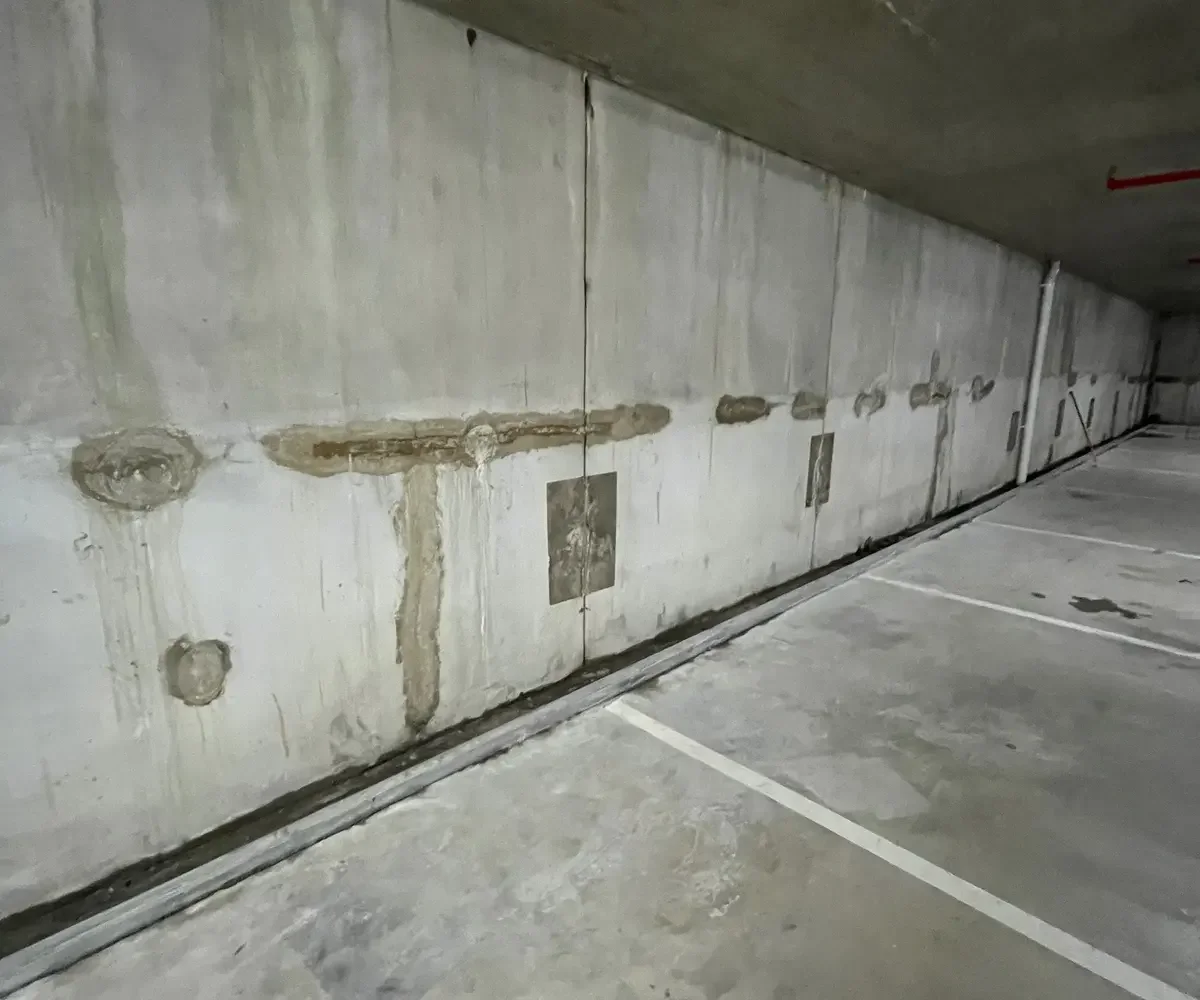
Depending on the conditions, repairs may include pressure injection of cracks and construction joints, treatment of wall-to-slab junctions, repair of honeycombed or defective concrete, sealing of penetrations, crystalline waterproofing and other negative-side waterproofing systems.
The important distinction is that the repair method should be selected according to the cause of the water ingress, rather than applying the same waterproofing product to every leak.
Specialist Basement Water Ingress Repairs
Large underground car parks and commercial basement structures require a different approach from conventional membrane waterproofing. Once a structure has been constructed and backfilled, successful remediation requires an understanding of concrete construction, hydrostatic pressure, cracking, construction joints and how groundwater travels through reinforced concrete.
At TruBond Concrete Repairs, we specialise in remedial water ingress repairs for underground car parks, multi-level basements, lift pits, retaining walls and other below-ground concrete structures across Sydney. Our repair methods include crack and joint injection, crystalline waterproofing, penetration sealing and concrete remediation.
If your basement or underground car park is experiencing active leaks, persistent dampness or water ingress through concrete walls and construction joints, TruBond can assess the affected areas and develop a repair strategy suited to the structure and the source of the leak.