
Project Type: Existing home
Location: Bateu Bay, Central Coast
Client: Owner
Challenge: Injection off limit due to possible damage to internal tiles and pool plumbing
Repair Method: Penetron
Scope: Water ingress elimination to the full length of the construction joint
Outcome: 100% water stoppage achieved
Project Overview
TruBond Concrete Repairs was engaged to undertake specialist water ingress remediation to an existing residential swimming pool in Bateau Bay on the NSW Central Coast. The pool was experiencing significant active water leakage through a construction joint, allowing water to escape through a defect in the concrete structure.
As the swimming pool was already completed and tiled internally, the repair methodology needed to eliminate the leakage without risking damage to the existing finishes or pool plumbing. Conventional pressure injection was considered unsuitable due to the potential for injection pressure to damage or dislodge tiles and the possibility of resin migrating into the pool or associated plumbing.
A Penetron cementitious waterproofing system was selected as an alternative, incorporating temporary pressure-relief valves to manage the active water flow while the repair materials developed sufficient strength.
The Challenge
The primary challenge was the continuous flow of water through the existing construction joint. Construction joints form an interface between separate concrete pours and can become vulnerable to leakage where the original waterproofing detail is defective or has deteriorated.
The completed condition of the swimming pool introduced an additional complication. Pressure injection, although commonly used to seal leaking concrete cracks and construction joints, presented unacceptable risks to the existing tiled finishes and plumbing.
Injecting resin under pressure into the joint could potentially generate localised pressure behind the pool's tiles, resulting in debonding, cracking or displacement of the finished surface. There was also concern that uncontrolled resin migration could allow material to enter the pool or associated plumbing through interconnected defects, potentially causing damage or blockages. Given these risks, a less intrusive approach was required that could stop the active leakage without relying on pressurised resin injection.
A further challenge was the need to manage hydrostatic pressure during the application and curing of the cementitious repair materials. Without adequate pressure relief, flowing water could compromise the repair before it had developed sufficient strength.
Remediation Strategy
TruBond implemented a targeted negative-side waterproofing methodology using a Penetron system, incorporating temporary pressure-relief valves to control the active leakage throughout the repair process.
Construction Joint Preparation
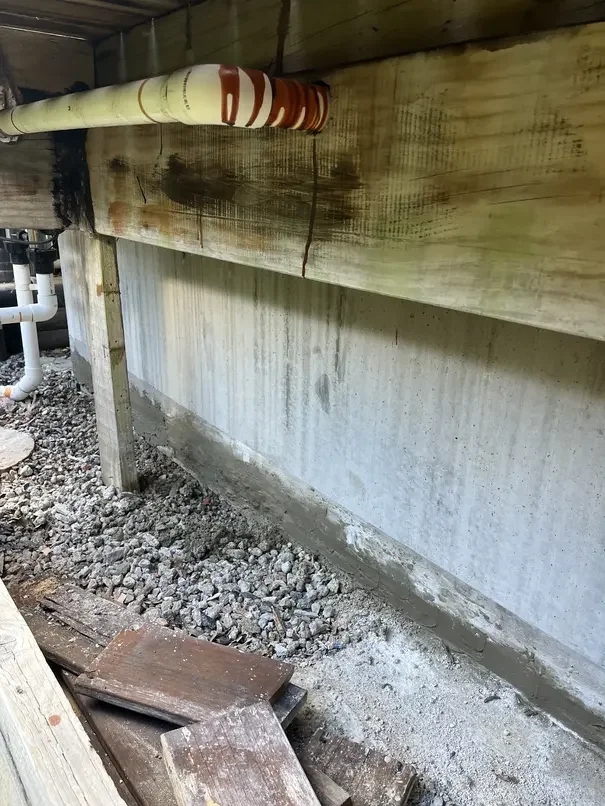
The affected construction joint was identified and mechanically prepared to expose a suitable substrate for the waterproofing treatment. A dovetail shape was chased into the construction joint along its entire length.
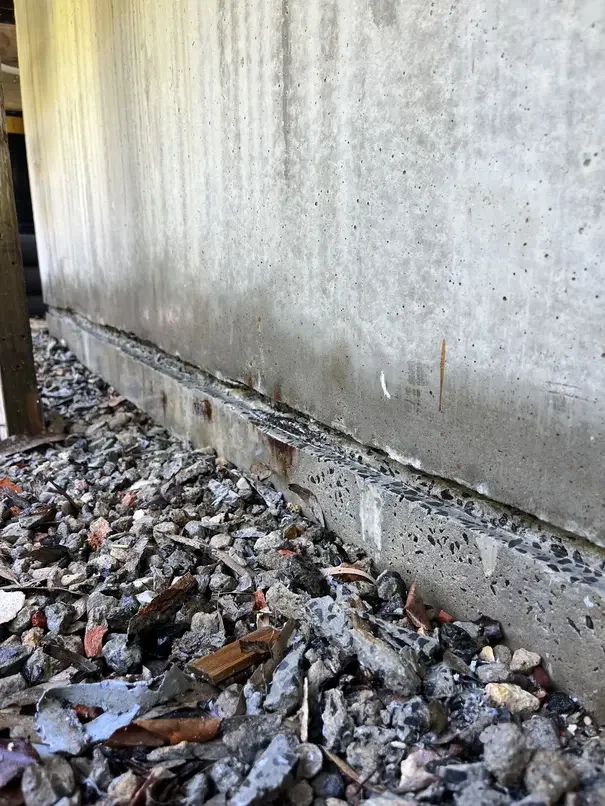
Dovetail cut completed ready for Penetron
Active Leak Control Without Pressure Injection
Rather than injecting resin into the construction joint, the affected area was treated using a Penetron cementitious waterproofing system. This approach avoided introducing pressurised resin into the structure, reducing the risk of damage to the existing pool tiles, waterproofing finishes and associated plumbing.
The majority of the active leakage was successfully arrested within the first day of remediation.
Temporary Pressure-Relief Valves
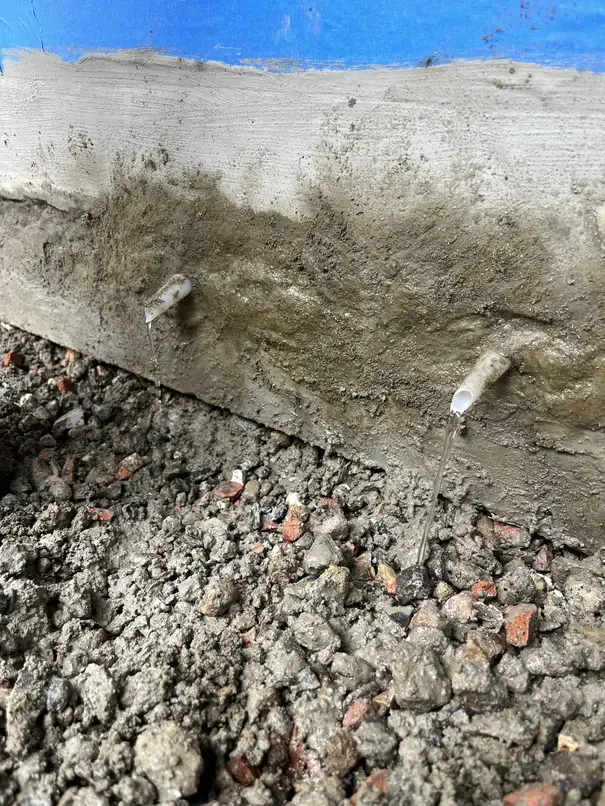
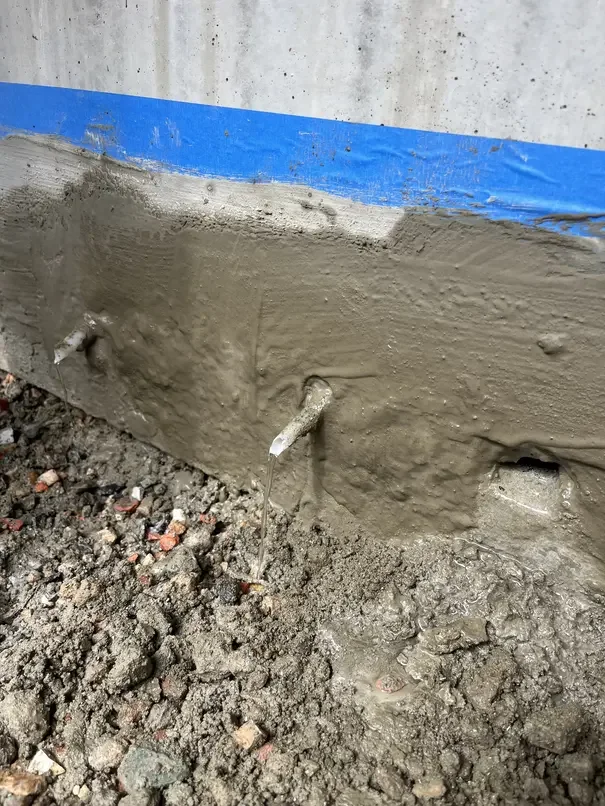
Temporary pressure-relief valves were installed within the repair area to provide controlled drainage points for the remaining water. 3 relief points were installed along the area experiencing the worst flow rate. Peneplug was applied along the rest of the joint, working towards these pressure relief valves in order to ensure water was directed to these specific points. These valves allowed water to escape through designated outlets rather than forcing its way through the newly placed cementitious repair material. By relieving the pressure acting on the repair, the surrounding waterproofing treatment could develop strength without being continuously undermined by active water flow.
Curing and Final Sealing
Following the initial treatment, the pressure-relief valves remained open for several days while the surrounding cementitious repair gained strength. Once sufficient strength had developed, the valves were permanently plugged using the Penetron repair system, eliminating the remaining drainage pathways through the construction joint.
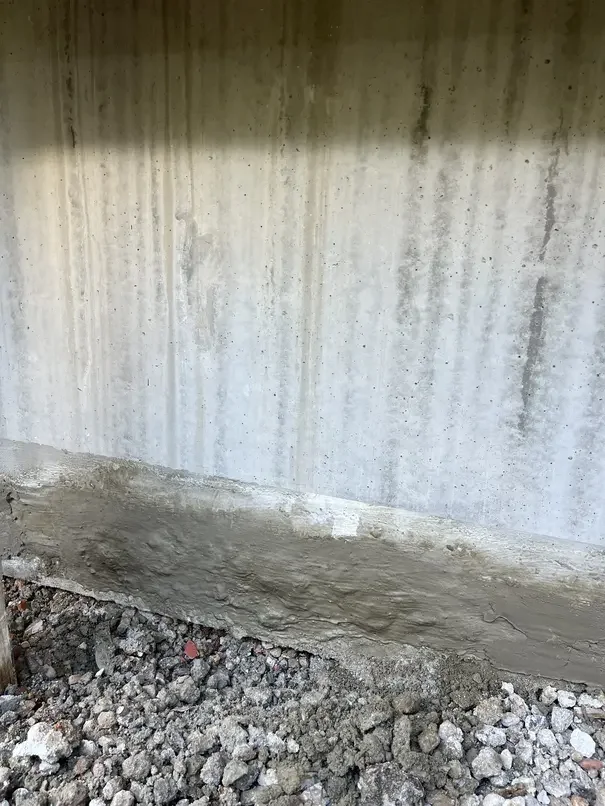
The completed repair was then inspected to confirm that the active leakage had been successfully stopped.
Project Outcome
The active swimming pool leak was successfully brought under control within the first day of remediation, with temporary pressure-relief valves allowing the remaining water to drain while the surrounding repair gained strength.
Following several days of curing, the valves were permanently sealed, achieving 100% elimination of the observed water leakage through the affected construction joint.
Importantly, the repair was completed without pressure injection, avoiding the associated risks to the existing tiled pool interior and plumbing. The targeted cementitious waterproofing methodology also eliminated the need for extensive demolition or reconstruction of the completed pool.
This project demonstrates the importance of selecting a waterproofing methodology based on the specific conditions of an existing structure. While pressure injection is an effective treatment for many concrete leaks, it is not always the most appropriate solution, particularly where finished surfaces, concealed services or interconnected water pathways introduce additional risks.
By combining targeted Penetron waterproofing treatments with temporary pressure relief, TruBond was able to control a high-flow construction joint leak while preserving the existing swimming pool finishes.
Need Expert Concrete Repair Advice?
Whether you're dealing with concrete spalling, reinforcement corrosion, structural deterioration or water ingress, TruBond Concrete Repairs delivers tailored remediation solutions designed for long-term performance.
From residential projects through to large commercial developments, our team combines proven repair methodologies with high-quality materials to restore both the durability and appearance of reinforced concrete structures.