
Project Type: Multi-residential
Location: Kensington, NSW
Client: Owner
Challenge: Full soffit replacement while recreating original stair dimensions
Repair Method: Form and Pour
Scope: Complete soffit replacement, additional steel and structural grout re-pour
Outcome: Class 2 finish achieved on new stair soffit with structural strength restored
Project Overview
TruBond Concrete Repairs was engaged to undertake extensive concrete cancer remediation to an existing reinforced concrete staircase in Sydney. The structure had experienced significant reinforcement corrosion, resulting in widespread concrete delamination, spalling and deterioration of critical reinforcement connections.
The extent of deterioration was particularly severe at the starter bars, where corrosion had caused a complete loss of steel cross-section in several locations. This required more than conventional concrete patch repairs, with temporary structural propping, reinforcement replacement and extensive concrete reinstatement necessary to restore the integrity of the staircase.
The remediation involved the removal of deteriorated concrete from the stair soffit, installation of new chemically anchored starter bars and reconstruction of the affected sections using a structural cementitious grout. A form-and-pour methodology was selected to accurately recreate the existing stair profile while achieving a high-quality off-form concrete finish.
The repair works were completed over six working days, with formwork retained for an additional three days to support the curing and strength development of the structural grout.
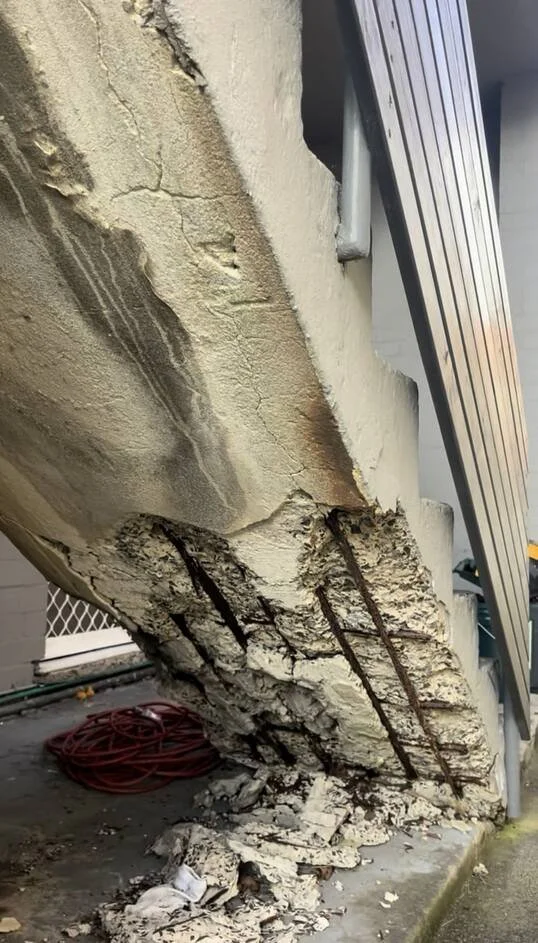
Extensive spalling and delamination prior to works commencing
The Challenge
The primary challenge was the extent of reinforcement corrosion and its impact on the structural integrity of the staircase. Several starter bars had corroded to the point of complete section loss, compromising the original reinforcement connections and requiring replacement before the concrete could be reinstated.
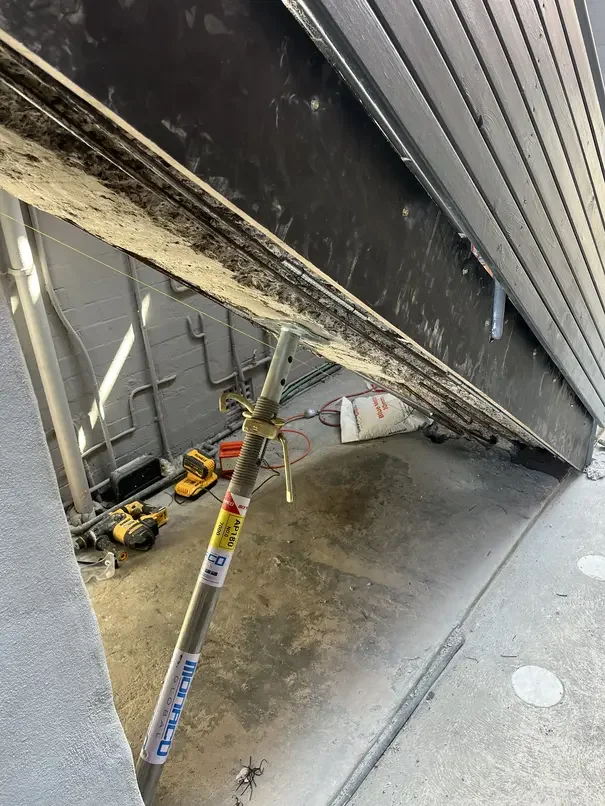
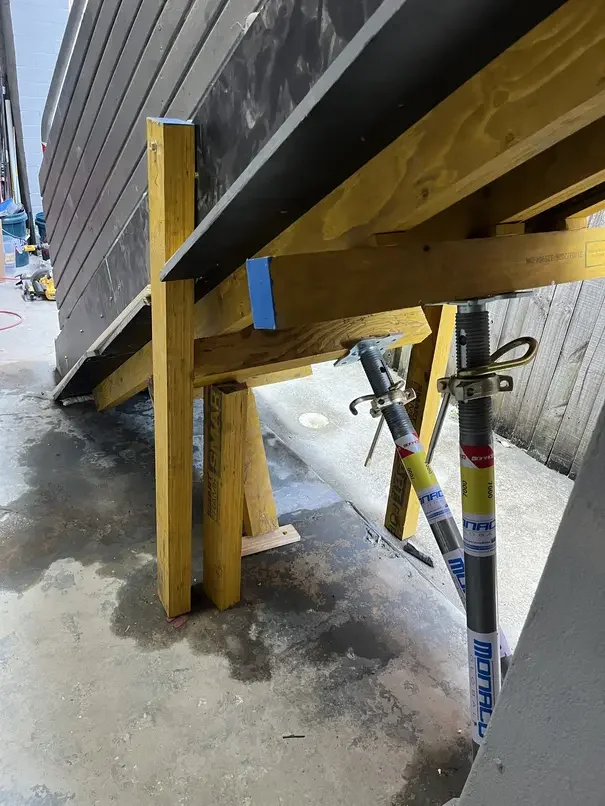
Given the severity of deterioration, temporary structural propping was required to support the staircase while the affected concrete was removed and the reinforcement connections were reconstructed.
A further challenge was the condition of the existing stair soffit. Widespread delamination and spalling meant that isolated patch repairs would not adequately address the deterioration. Extensive demolition was therefore required to remove unsound concrete and expose a suitable substrate for structural reinstatement.
The final challenge involved accurately recreating the original staircase geometry. Unlike conventional surface repairs, the reinstatement needed to reproduce the existing stair dimensions and soffit profile while ensuring the structural grout fully encapsulated the reinforcement and bonded effectively to the remaining concrete.
Remediation Strategy
TruBond implemented a structural concrete remediation methodology incorporating temporary propping, reinforcement replacement and form-and-pour reinstatement.
Temporary Structural Propping and Concrete Removal
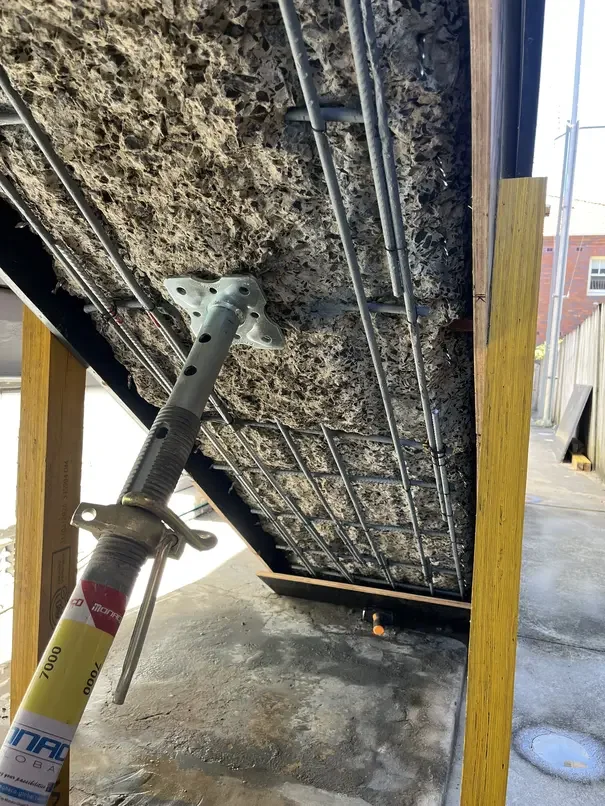
The staircase was temporarily propped to provide support during demolition and reinstatement. Deteriorated concrete was then mechanically removed from the stair soffit, exposing the reinforcement and allowing the extent of corrosion to be assessed. All identified unsound concrete within the repair scope was removed to establish a suitable substrate for the structural grout.
Reinforcement Replacement and Corrosion Treatment
Where the existing starter bars had completely deteriorated, new reinforcement was installed using drilled and chemically anchored connections into the existing concrete.
The replacement starter bars were incorporated into the reinforcement arrangement to reinstate the required structural connections. Retained reinforcement was prepared and treated as part of the concrete cancer remediation process.
Formwork Installation and Stair Profile Reconstruction
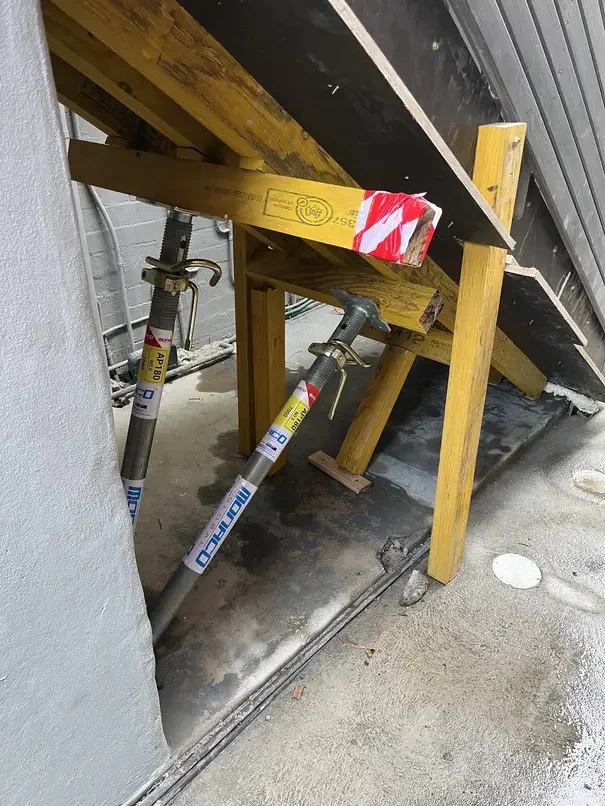
A form-and-pour methodology was selected to reinstate the stair soffit while accurately reproducing the original staircase dimensions. Formwork was constructed to follow the existing stair profile and provide a controlled cavity for placement of the structural grout. Particular attention was given to maintaining the required geometry, concrete cover and alignment with the surrounding structure.
Openings were created using a holesaw through the staircase to facilitate grout placement, allow trapped air to escape and provide access for wetting the existing concrete substrate. Prior to grout placement, water was introduced through these openings to achieve a damp substrate, reducing the risk of the existing concrete absorbing moisture from the freshly placed cementitious grout.
Structural Grout Placement and Curing
A flowable structural cementitious grout was placed into the prepared formwork, allowing the material to flow around the reinforcement and fill the repair cavity.
The grout was introduced progressively, with the access and vent openings assisting placement and the release of trapped air. This was particularly important given the inclined geometry of the staircase and the need to achieve complete encapsulation beneath the existing concrete.
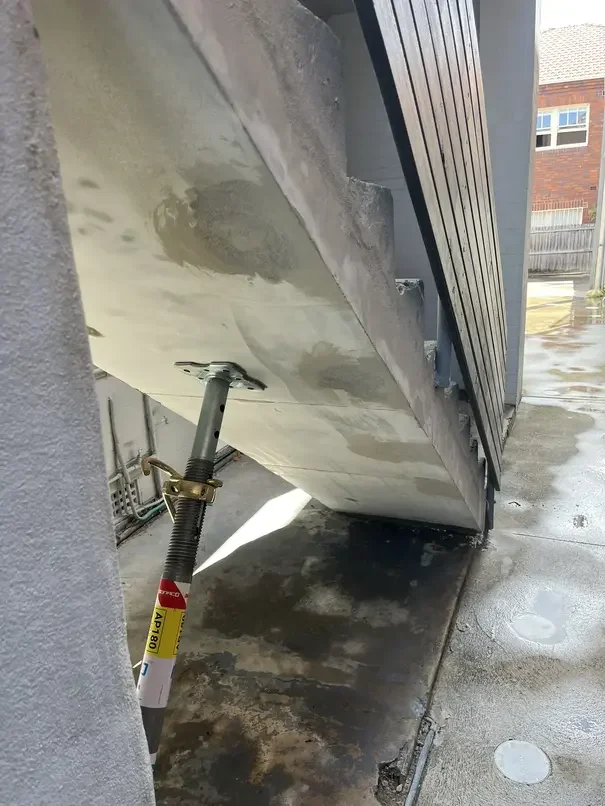
Following placement, the formwork remained in position for an additional three days to support the curing and strength development of the repair material before removal.
Project Outcome
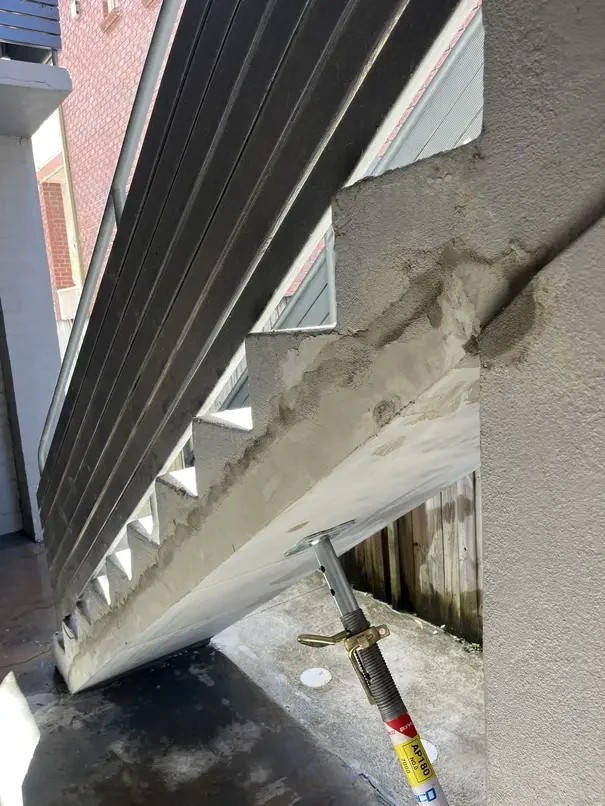
The concrete cancer remediation was successfully completed over six working days, with the formwork retained for a further three days before stripping.
The works reinstated the deteriorated stair soffit, replaced severely corroded starter bars and restored structural continuity through the reconstructed reinforcement connections and structural grout repair.
The form-and-pour methodology allowed the original staircase dimensions to be accurately reproduced without the need for extensive surface finishing. Upon removal of the formwork, a Class 2 off-form concrete finish was achieved, providing a clean and consistent appearance across the repaired soffit.
This project demonstrates the importance of addressing the structural consequences of advanced reinforcement corrosion rather than simply reinstating the visible concrete surface. Where reinforcement has suffered significant section loss, effective remediation may require temporary support, replacement reinforcement and structural reconstruction to restore the intended performance of the element.
Need Expert Concrete Repair Advice?
Whether you're dealing with concrete spalling, reinforcement corrosion, structural deterioration or water ingress, TruBond Concrete Repairs delivers tailored remediation solutions designed for long-term performance.
From residential projects through to large commercial developments, our team combines proven repair methodologies with high-quality materials to restore both the durability and appearance of reinforced concrete structures.