
Concrete Spalling Repair – External Swimming Pool, Newport
Project Type: Residential
Location: Newport, NSW
Client: Homeowners
Challenge: Pool remaining in service without disruption, damage to internal finishes or puncture of the pool wall
Repair Method: Form and Pour with SikaGrout + Helifix Pins
Scope: External pool corner
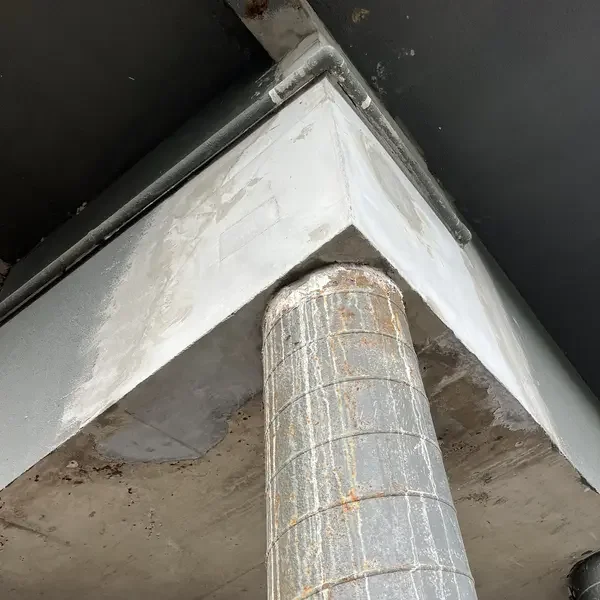
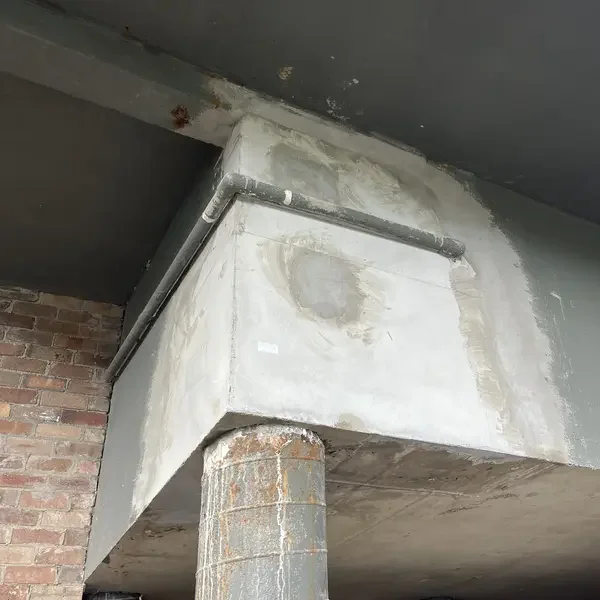
Outcome: Reconstruction of original dimensions and geometry ready for protective coating
Project Overview
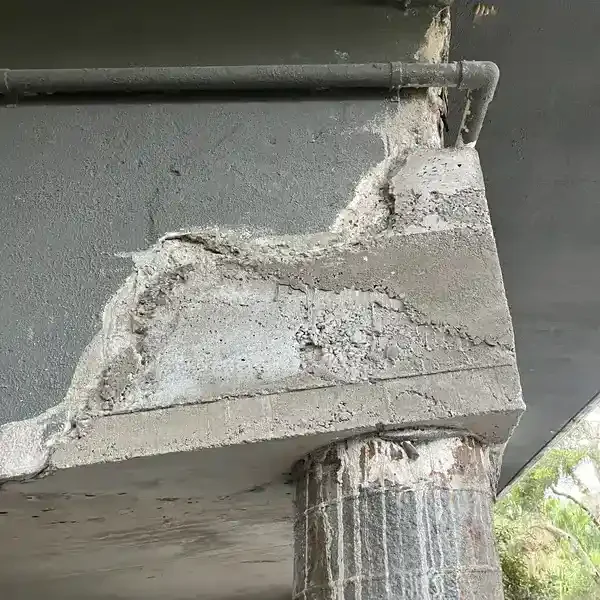
TruBond Concrete Repairs was engaged by the homeowner to restore a significant area of concrete spalling on the external corner of a residential swimming pool in Newport, Sydney.
Located in a coastal environment, the pool structure had experienced reinforcement corrosion resulting from inadequate concrete cover. Over time, moisture and airborne chlorides penetrated the concrete, causing the reinforcing steel to corrode and expand. This expansion generated internal pressure within the concrete, eventually leading to cracking, delamination and spalling around the corner of the pool.
The objective of the project was to remove all deteriorated concrete, protect the reinforcing steel, structurally reinstate the damaged corner and restore the original off-form concrete finish while maintaining the pool in service throughout the repair.
The project was successfully completed over three days.
The Challenge
The pool remained full and in-service throughout the repair. Remediation techniques were carefully chosen to ensure that the remaining sound concrete wasn’t compromised. Failure to do so can result in complete puncture of the pool wall and damage to the waterproofing or tiles internally.
The damaged area extended approximately one metre along each side of the external corner and approximately 1.2 metres vertically.
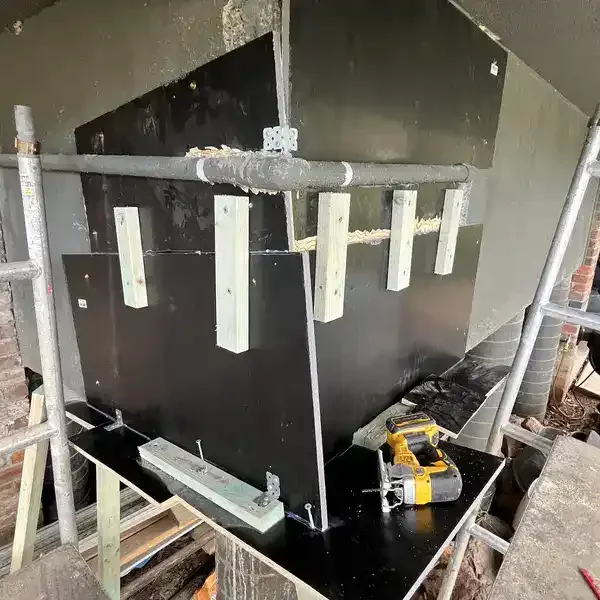
Because the repair involved a large external corner, form and pour method with pour pockets was employed to ensure precise reconstruction of original dimensions.
Remediation Strategy
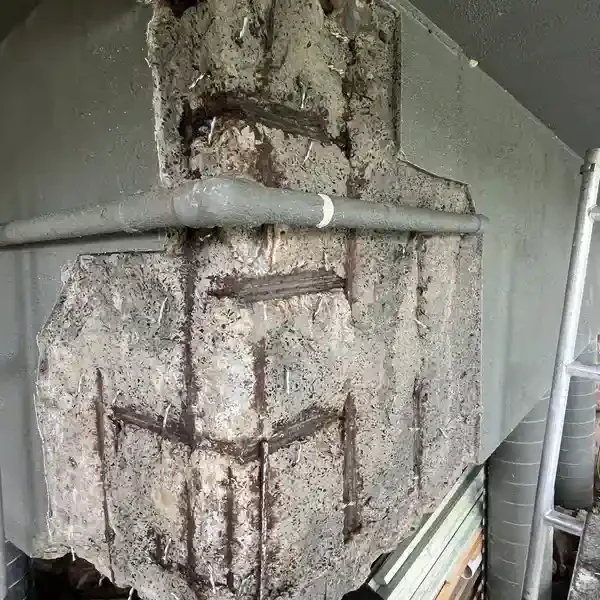
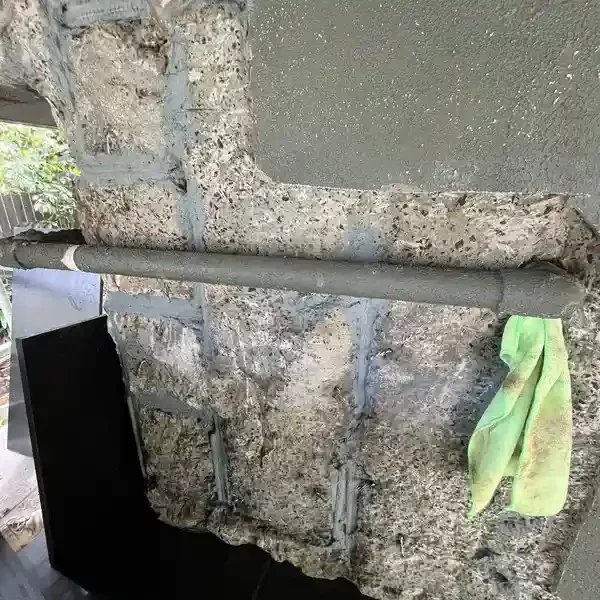
The repair commenced with the complete removal of all unsound concrete until a clean, competent substrate was exposed.
Once the deteriorated concrete had been removed, the reinforcing steel was thoroughly cleaned using a needle scaler and water to eliminate corrosion products and prepare the surface for treatment.
To provide long-term corrosion protection, the exposed reinforcement was coated with Fosroc Nitoprime Zincrich, a zinc-rich anti-corrosion primer designed to protect embedded reinforcing steel from future corrosion.
Given the size of the repair and its location on the corner of the pool, stainless steel Helifix reinforcement pins were installed to provide additional mechanical anchorage between the existing concrete and the reinstatement.
The exposed substrate naturally provided an excellent mechanical key, allowing the repair system to develop a strong bond with the existing structure.
Form-and-Pour Reinstatement
Rather than rebuilding the damaged corner using a conventional hand-applied repair mortar, new formply shutters were constructed around the repair and the corner was reinstated using SikaGrout Deep Pour, a high-strength, non-shrink cementitious grout.
For larger corner repairs such as this, a form-and-pour approach offers several important advantages. The flowable grout completely fills the repair cavity, achieving excellent compaction while minimising the risk of voids and shrinkage often associated with large hand-applied repairs.
This method also enables the original geometry of the structure to be accurately reinstated while producing a high-quality finish that blends seamlessly with the surrounding structure after paint application.
Project Outcome
The repair successfully reinstated both the structural integrity and architectural appearance of the damaged pool corner.
The deteriorated concrete was completely removed, the reinforcing steel was protected against future corrosion, and the corner was reconstructed to its original profile using a durable, high-strength repair system.
Most importantly it was completed safely and efficiently over three days with minimal disruption to the property.
Construction Insights & Lessons Learned
Projects such as this highlight the importance of good concrete detailing and early intervention when signs of deterioration first appear.
1. Adequate Concrete Cover Is Essential in Coastal Environments
Coastal environments expose reinforced concrete to airborne chlorides and persistent moisture, significantly accelerating the corrosion process where reinforcement is inadequately protected. Use of galvanised steel or sacrificial anodes can drastically improve the lifetime of the structure.
Providing sufficient concrete cover is one of the most effective ways to maximise the service life of reinforced concrete structures exposed to marine conditions. A minimum of 50mm cover is essential to minimising the chance of spalling.
2. Early Repairs Can Prevent Extensive Damage
Concrete spalling is rarely an isolated defect.
Once reinforcing steel begins to corrode, the expansion of corrosion products places increasing pressure on the surrounding concrete, causing progressive cracking and delamination.
Addressing minor defects early can often prevent the need for substantially larger structural repairs in the future.
3. Not All Corroded Reinforcement Requires Replacement
Corrosion alone does not necessarily mean reinforcing steel must be removed.
Where reinforcement remains structurally sound after cleaning, appropriate surface preparation and the application of a zinc-rich anti-corrosion primer can provide effective long-term protection while preserving the original reinforcement.
Each repair should be assessed individually to determine the most appropriate remediation strategy.
4. Larger repairs Benefit from Form-and-Pour Construction
Where significant sections of concrete require reinstatement, form-and-pour techniques often provide a superior outcome compared with conventional hand-applied repair mortars.
Flowable, non-shrink grouts achieve excellent consolidation, restore the original geometry of the structure and produce consistent architectural finishes that are difficult to achieve using traditional patch repair methods.
Selecting the appropriate repair methodology is critical to both the structural performance and long-term durability of the repair.
Need Expert Concrete Repair Advice?
Whether you're dealing with concrete spalling, reinforcement corrosion, structural deterioration or water ingress, TruBond Concrete Repairs delivers tailored remediation solutions designed for long-term performance.
From residential projects through to large commercial developments, our team combines proven repair methodologies with high-quality materials to restore both the durability and appearance of reinforced concrete structures.