
Commercial Swimming Pool Leak Remediation – Aquatic Centre, NSW
Project Type: Aquatic Centre
Location: New South Wales
Client: Head Contractor
Challenge: Significant water ingress throughout the pool structure causing programme delays
Repair Method: Penetron System
Scope: To completely eliminate leaks and release the hold point allowing waterproofing and tiling to commence. 100+ areas treated
Outcome: All leaks and damp spots were completely eliminated within 12 weeks
Project Overview
TruBond Concrete Repairs was engaged by the head contractor to remediate widespread water leakage throughout multiple commercial swimming pools within a new aquatic centre under construction in New South Wales.
Before the waterproof membrane could be installed, the concrete pool structures were required to meet a critical construction hold point by demonstrating they were completely watertight. Active leaks throughout the concrete prevented subsequent waterproofing works from proceeding, delaying the construction programme until the defects could be successfully remediated.
Over a 12-week period, TruBond treated more than 100 individual leak locations across multiple pools using the Penetron System, enabling the project to progress to the next stage of construction.
The Challenge
Unlike many leaking concrete structures, the majority of defects on this project were not associated with visible cracks.
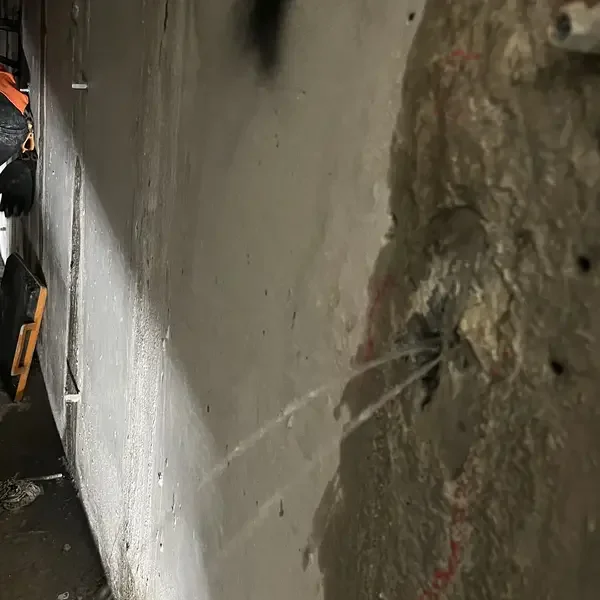
Instead, water was escaping through a variety of concrete defects, including:
Honeycombing within the concrete.
Failed wall/floor construction joints.

Galvanised formwork V-braces that had created water pathways through the wall.
Localised porous areas where water migrated through the concrete matrix.
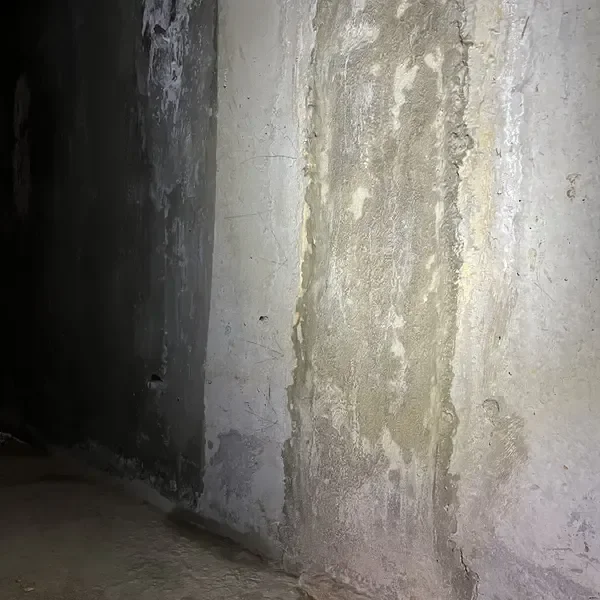
Some defects presented as active flowing leaks, while others appeared only as damp patches slowly penetrating through the concrete surface.
This highlighted an important principle in concrete remediation: not every leak is caused by a crack. Water will always follow the path of least resistance, and even small imperfections within the concrete can become significant leakage pathways once the structure is filled.
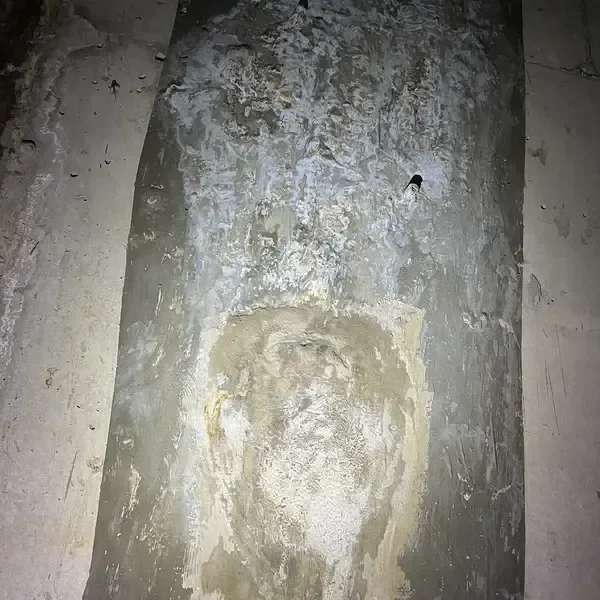
Honeycombing occurs where concrete has not fully consolidated within the formwork or around reinforcing steel, leaving interconnected voids that provide pathways for water migration through the structure.
Successfully treating these defects required more than simply locating obvious leak points—it required identifying every pathway through which water was escaping from the pool.
Remediation Strategy
Following detailed inspection, the Penetron System was selected as the primary remediation method for all identified leak locations.
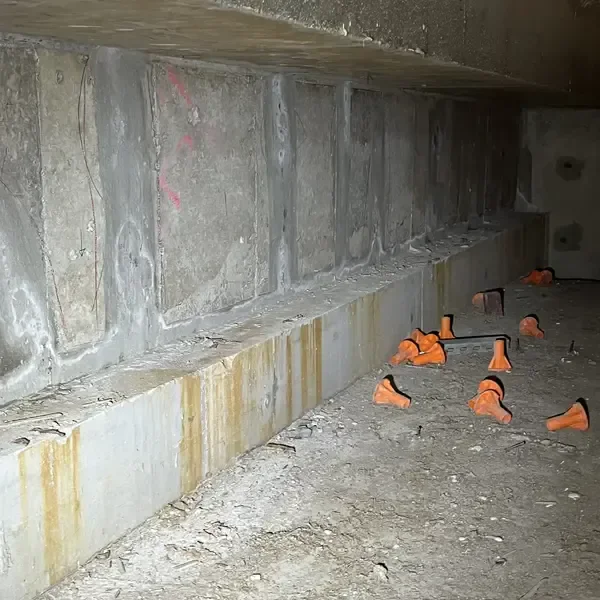
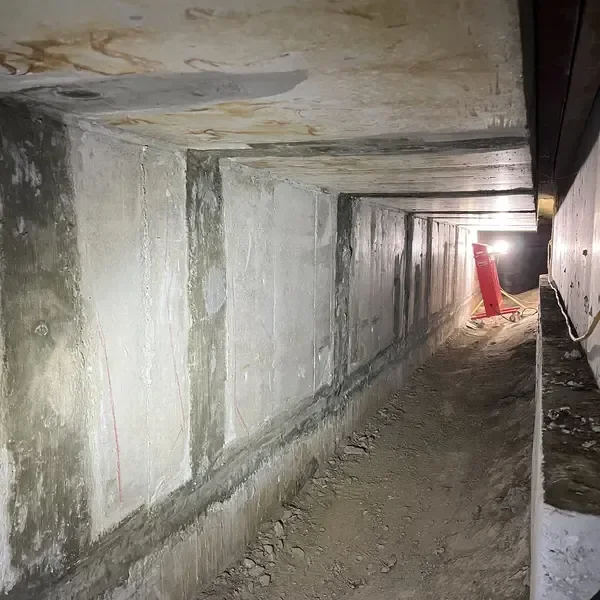
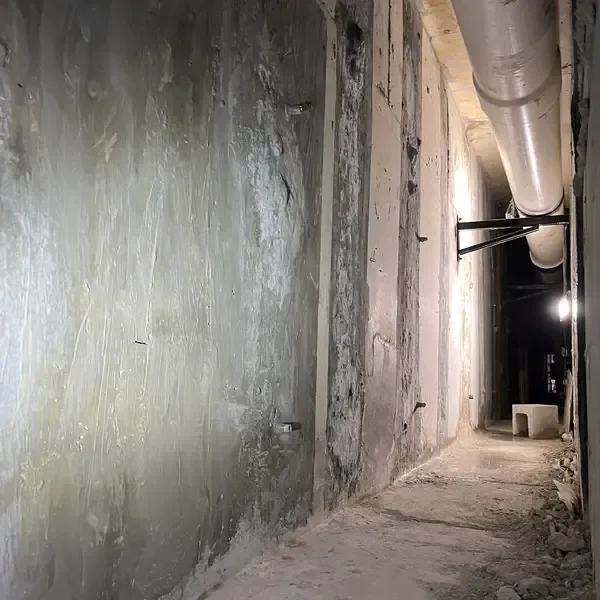
Working entirely from the outside face of the pool structures, each leaking area was carefully prepared before the Penetron repair system was installed.
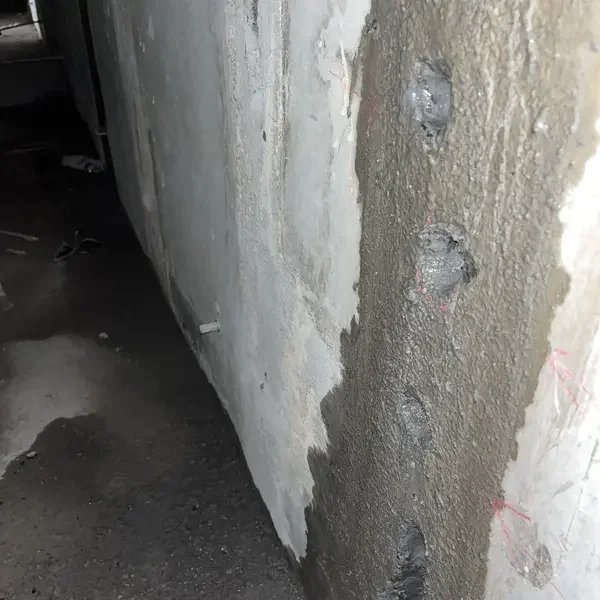
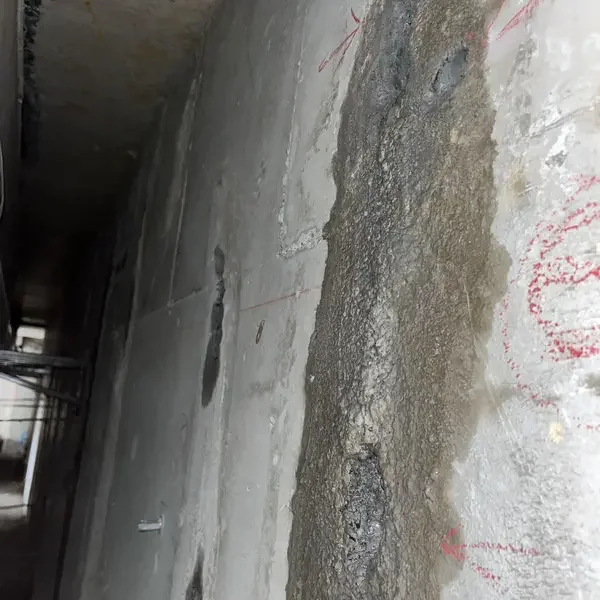
The repair process involved:
Identifying the pathway through which water was escaping.
Chasing out a channel to receive the repair material.
Stopping active water flow using Peneplug where required.
Reinstating the repair using Penecrete Mortar.
Applying a Penetron slurry over the treated area.
Unlike conventional surface coatings, the Penetron System works by generating insoluble crystals within the concrete's capillary network. These crystals become integrated within the concrete itself, blocking water pathways while remaining capable of reactivating in the presence of moisture to seal future micro-pathways that may develop. They also allow the concrete to breathe rather than forming an impenetrable seal.
Because the repairs were completed from the negative side of the structure, the presence of water within the pools was essential to the effectiveness of the crystalline waterproofing process. This approach enabled widespread leakage to be addressed without requiring invasive demolition or access to the internal face of each defect.
Project Outcome
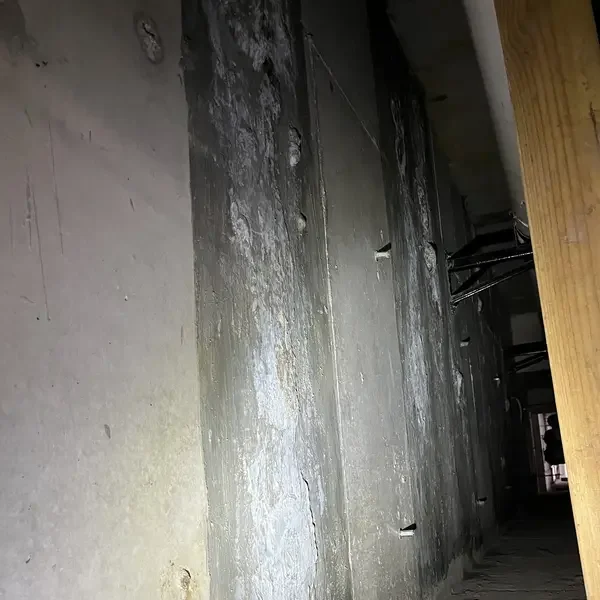
Over the course of twelve weeks, more than 100 individual leak locations were successfully remediated across multiple commercial pools.
The completed repairs eliminated active water leakage and allowed the concrete structures to satisfy the required hold point for waterproof membrane installation, enabling construction to continue.
The project demonstrated how crystalline waterproofing systems can provide an effective solution for complex leakage issues where defects extend beyond conventional cracks and construction joints.
Construction Insights & Lessons Learned
Projects of this scale reinforce several important principles for the construction of watertight reinforced concrete pools.
1. Not Every Leak Is Caused by a Crack
Concrete defects such as honeycombing, porous concrete and formwork-related voids can all provide pathways for water migration despite there being no visible crack within the structure.
Successful leak remediation begins with understanding how water is travelling through the concrete rather than simply repairing what is immediately visible.
2. Concrete Consolidation Begins with Good Mix Design
Achieving proper consolidation becomes increasingly difficult as reinforcement density increases within pool walls.
Where reinforcement is congested, internal vibrators may struggle to fully consolidate the concrete around every bar and embedded item.
Selecting an appropriate concrete mix with sufficient slump significantly improves the concrete's ability to flow around reinforcement and fill the formwork, reducing the likelihood of honeycombing and void formation while minimising reliance on vibration alone.
3. Repair Concrete Defects Before Filling the Pool
Where possible, visible defects such as honeycombing, construction joints and other imperfections should be repaired from the positive side before the pool is filled.
Early intervention is generally simpler, more cost-effective and reduces the likelihood of ongoing leakage once the structure becomes operational.
4. Crystalline Waterproofing Relies on the Presence of Water
One of the unique characteristics of crystalline waterproofing systems is that moisture is fundamental to their performance.
When repairing leaks from the negative side of a structure, the pool must remain full so that water continues to drive the crystalline reaction within the concrete.
Understanding this principle is essential when planning leak remediation works, as the presence of water is not an obstacle to the repair—it is a critical component of the repair system itself.
Need Help with a Leaking Concrete Pool?
Whether you're constructing a commercial aquatic facility, apartment pool or other water-retaining structure, TruBond Concrete Repairs specialises in diagnosing and remediating concrete water ingress using proven crystalline waterproofing systems or injection.
From isolated leaks through to widespread concrete defects, our team delivers practical remediation solutions that enable projects to move forward with confidence.